.png)
WASHINGTON â Plans announced Sunday to fully reimburse deposits made in the collapsed Silicon Valley Bank and the shuttered Signature Bank will rely on Wall Street and large financial institutions â not taxpayers â to foot the bill, Treasury officials said.
"For the banks that were put into receivership, the FDIC will use funds from the Deposit Insurance Fund to ensure that all of its depositors are made whole," said a senior Treasury Department official, who spoke to reporters Sunday about the plan on the condition of anonymity.
related investing news


"The Deposit Insurance Fund is bearing the risk," the official emphasized. "This is not funds from the taxpayer."
The Deposit Insurance Fund is part of the FDIC and funded by quarterly fees assessed on FDIC-insured financial institutions, as well as interest on funds invested in government bonds.
The DIF currently has over $100 billion in it, a sum the Treasury official said was "more than fully sufficient" to cover SVB and Signature depositors.
In addition to protecting these deposits, the Federal Reserve announced a new Bank Term Funding Program that is aimed at safeguarding institutions vulnerable to the market instability created by the SVB failure.
The new Fed facility will offer loans of up to one year to banks, saving associations, credit unions and other institutions. Those taking advantage of the facility will be asked to pledge high-quality collateral like Treasurys, agency debt and mortgage-backed securities.
The BTFP will value these fixed income assets at par, a boon for the banks that hold long-term assets with yields lower than current market rates. In a BTFP collateral agreement, these bonds would be worth more than they are on the open market, where they would sell at a loss.
The Wall Street Journal's editorial board labeled the DIF deposit rescue plan and the BFTP as two separate "bailouts" in an op-ed Sunday.
But Biden administration officials strongly pushed back on the idea that the bank plans constituted a "bailout."
"The banks' equity and bond holders are being wiped out," said the official at Treasury. "They took a risk as owners of the securities, they will take the losses."
"The firms are not being bailed out ... depositors are being protected."
The White House strategy is clearly informed by the memory of public anger sparked by taxpayer-funded bailouts of major Wall Street banks during the 2008 financial crisis. Using the DIF to shore up depositors is seen as a way to avoid repeating the same process.
President Joe Biden said tapping the DIF will ensure "taxpayer dollars are not put at risk."
Already Sunday night, there were signs that Biden's plan to use the DIF was being met with approval on Capitol Hill.
Sen. Bernie Sanders, I-Vt., a fierce critic of the 2008 bank bailouts, said if there was to be a bailout of SVB "it must be 100 percent financed by Wall Street and large financial institutions," which the DIF is.
Sanders blamed SVB's collapse on successful Republican efforts to relax banking regulations, signed into law by former President Donald Trump in 2018. California Democratic Rep. Katie Porter said she was already writing legislation to reverse the Trump-era bill.
Even some Republicans expressed support for the federal actions taken to stem the fallout from SVB and Signature.
"I have confidence in our financial regulators" to ensure the banking system is stable, Rep. Patrick McHenry, N.C., the Republican chairman of the House Financial Services Committee, said in a statement.
South Carolina GOP Sen. Tim Scott, a potential 2024 Republican presidential candidate, said it was "important we bring our markets to a calm and orderly resolution."
But any hint of a political detente was only temporary. Republicans and Democrats remained deeply divided on the issue of financial regulation, setting the stage for battles later this year over who was to blame for SVB's collapse and how to prevent the next massive bank failure.
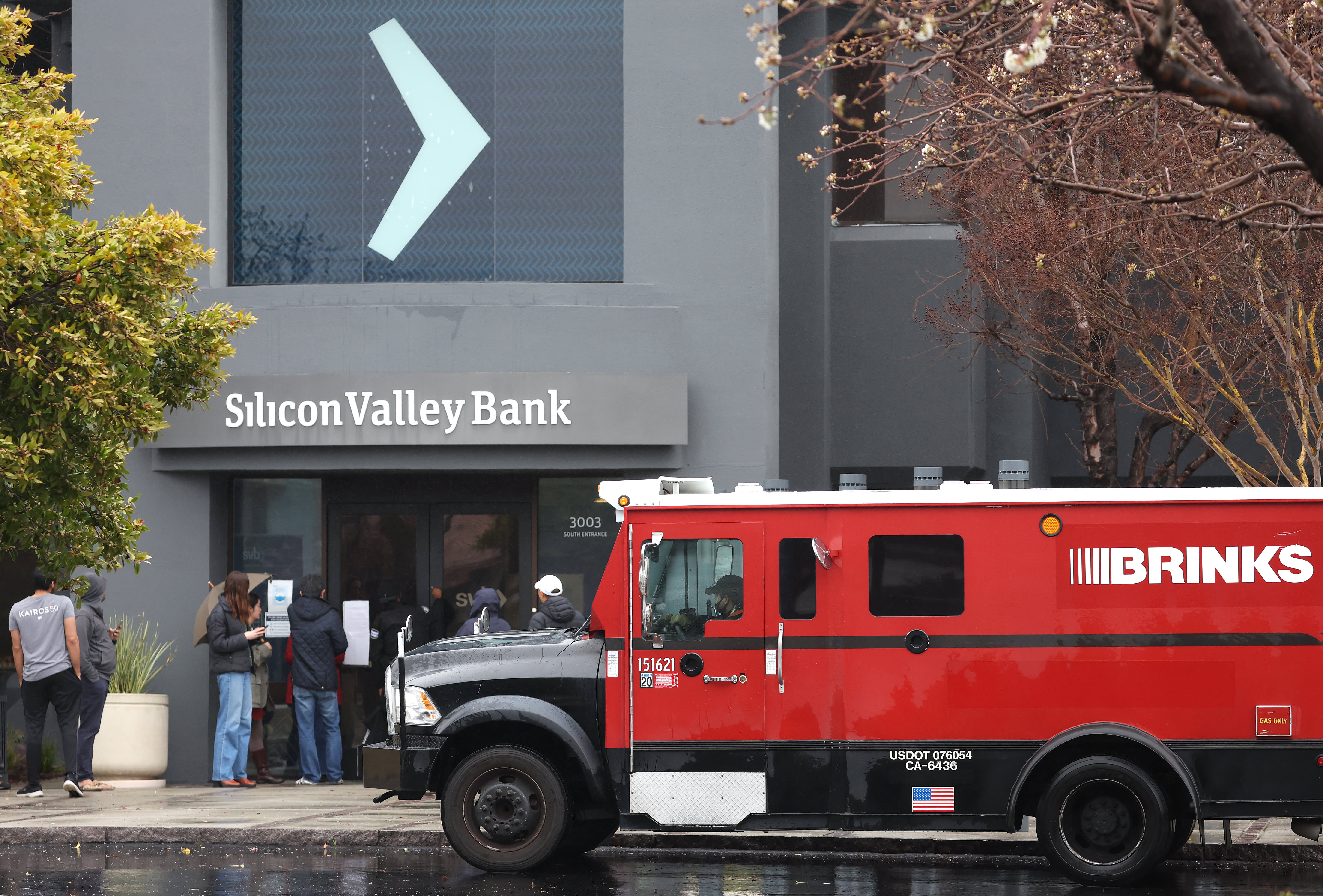
Sunday's dramatic moves came just days after SVB, a key financing hub for tech companies, reported that it was struggling, triggering a run on the bank's deposits. Signature was closed by the government on Sunday.
The SVB failure was the nation's largest collapse of a financial institution since Washington Mutual went under in 2008.






 English (United States) ·
  Turkish (Turkey) ·