.png)
Ukrainian officials have projected a more optimistic tone for the talks than on previous occasions when negotiations between the two nations have ended without resolution. But Ukraine still insists it wants an immediate cease-fire and Russian troops gone. Illustrating the invasion’s toll on civilians, an injured, pregnant mother depicted in a photo showed the tragedy of maternity hospital bombing in Ukraine has died with her baby.
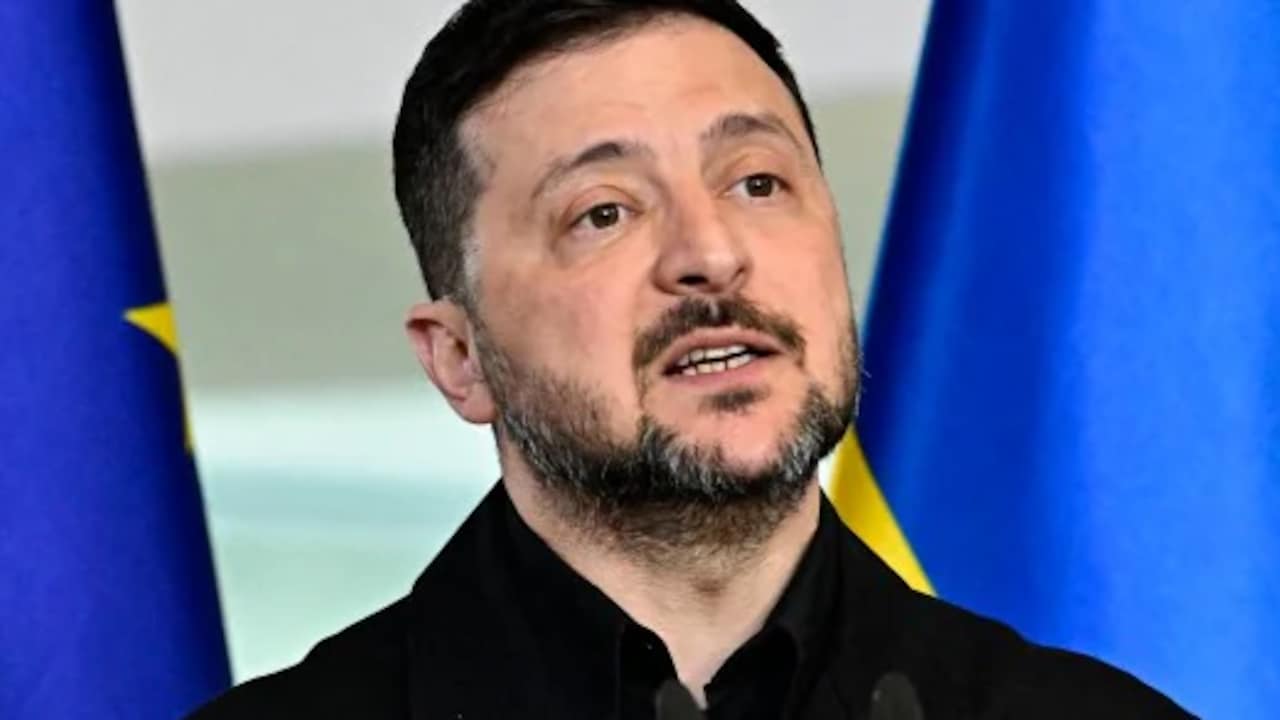
Meanwhile, in a letter to U.S. lawmakers, House Speaker Nancy Pelosi (D-Calif.) and Senate Majority Leader Charles E. Schumer (D-N.Y.) said Ukrainian President Volodymyr Zelensky will deliver a virtual joint address to Congress on Wednesday. “Congress, our country and the world are in awe of the people of Ukraine,” they wrote.
Ukraine is also set to dominate the agenda when U.S. national security adviser Jake Sullivan meets with China’s top diplomat, Yang Jiechi, in Rome on Monday. U.S. officials said Moscow has turned to China for military equipment and aid since the Russian invasion began more than two weeks ago. A Chinese Foreign Ministry spokesman Monday called the U.S. allegations “fake news.” A Russian presidential spokesman also denied that Moscow asked China for weapons.
Here’s what to know
U.S. stocks climb, oil sinks as investors monitor war
Return to menuWall Street mounted a fragile comeback on Monday, with the Dow climbing 300 points in morning trading even as investors remained focused on the war in Ukraine and a coronavirus spike in China.
Around 10:30 a.m., the Dow Jones industrial average had gained nearly 1 percent. The S&P 500 index had edged up nearly 0.7 percent, while the tech-heavy Nasdaq had gained about 0.15 percent.
Meanwhile, Hong Kong’s Hang Seng Index suffered its steepest drop since 2016 on Monday, closing nearly 5 percent lower as investors feared that a growing surge in coronavirus infections in China could lead to renewed business and travel restrictions. The city of Shenzhen, a financial hub that borders Hong Kong, has already been thrust back into lockdown, and schools in Shanghai have been shuttered as the outbreak tests China’s tough pandemic policies.
“Shenzhen going into lockdown could have negative effects beyond China’s economy. It is known as ‘the world’s factory’ thanks to its concentration of electronics manufacturing,” Russ Mould, investment director at AJ Bell, said Monday in comments emailed to The Washington Post. “Any prolonged disruption to operations could cause yet another global supply chain crunch.”
Oil prices continued their slide down from recent highs Monday but remained elevated. Brent crude, the international benchmark, fell 3.8 percent to trade near $108 per barrel. West Texas Intermediate crude, the U.S. benchmark, declined 4.8 percent to approximately $104 a barrel.
The national U.S. average for a gallon of gas was $4.32 on Monday, according to data from AAA, up 26 cents from a week ago.
It’s likely to be another volatile week for markets, as investors continue to monitor diplomatic talks between Russia and Ukraine and the conflict’s continuing economic ripple effects. Geopolitical turmoil is typically shrugged off by investors, but this conflict has vast ramifications because of Russia’s role as one of the world’s biggest energy producers. More disruption to energy markets could heat up inflation as the global economy tries to rebound from the pandemic.
Investors will be focused on the Federal Reserve’s upcoming meeting, as the central bank is widely expected to raise the benchmark interest rate, its best lever for tamping down inflation that had surged to a 40-year high even before the invasion of Ukraine.
War is exacerbating food prices and shortages, especially for food-insecure nations
Return to menuGovernments around the globe are struggling to deal with surging agriculture prices caused by Russia’s invasion of Ukraine, as the costs of core ingredients such as wheat, barley, corn and sunflower oil skyrocket.
Higher prices on these products have made food more expensive for businesses and families and are expected to worsen food insecurity in poorer countries, where staples such as flour and cooking oil were already hard to come by.
A Russian fertilizer and coal magnate said Monday a food crisis is looming, because of soaring costs of fertilizer, according to Reuters, which interviewed billionaire Andrei Melnichenko. Russia is a major fertilizer producer.
Agriculture ministers from the United States, Canada, Britain, Japan and other leading nations met Friday to discuss the crisis in a virtual meeting hosted by Germany, but there are no easy solutions.
While Russia’s invasion of Ukraine has similarly sparked an energy crisis, there are efforts underway to boost oil production. But increasing production of wheat or corn is complicated, particularly as nearly a third of the world’s wheat exports comes from Russia and Ukraine.
Global agricultural prices were already reaching an all-time high because of the pandemic and extreme weather from climate change. Now, the indirect effects of the Russian invasion are sending prices soaring for bread, animal feed and fertilizer for nearly all crops.
Ukraine’s Zelensky will deliver virtual joint address to Congress on Wednesday, Pelosi and Schumer say
Return to menuUkrainian President Volodymyr Zelensky will deliver a virtual address to members of the U.S. Congress on Wednesday morning, House Speaker Nancy Nancy Pelosi (D-Calif.) and Senate Majority Leader Charles E. Schumer (D-N.Y.) announced in a joint letter to their colleagues.
“The Congress, our country and the world are in awe of the people of Ukraine, who have shown extraordinary courage, resilience and determination in the face of Russia’s unprovoked, vicious, and illegal war,” Pelosi and Schumer said in the letter, dated Monday.
The leaders of the two chambers said the address will be broadcast in the Capitol Visitor Center Congressional Auditorium at 9 a.m. Eastern time and attended only by lawmakers.
“The Congress remains unwavering in our commitment to supporting Ukraine as they face Putin’s cruel and diabolical aggression, and to passing legislation to cripple and isolate the Russian economy as well as deliver humanitarian, security and economic assistance to Ukraine,” Pelosi and Schumer said in the letter.
“We look forward to the privilege of welcoming President Zelenskyy’s address to the House and Senate and to convey our support to the people of Ukraine as they bravely defend democracy.”
Squatters break into London mansion reportedly owned by Russian oligarch
Return to menuLONDON — Squatters early Monday broke into a mansion reportedly owned by a Russian oligarch, unfurled a Ukrainian flag and declared the property “liberated” and ready for refugees.
The home is said to belong to Oleg Deripaska, an oil tycoon and metals billionaire who the British government says is worth $2.6 billion.
Last week, he was added to Britain’s sanctions list, alongside his former business partner Roman Abramovich and five others, in the government’s most aggressive crackdown yet on Russian elites they say have close ties to Russian President Vladimir Putin.
The mansion isn’t hard to find — the white stucco building is located in Belgrave Square, dubbed “billionaire row” by British tabloids — and it’s a highlight on “kleptocracy tours” in London given by anti-corruption campaigners.
On Monday, the street was filled with police vans. Images on social media showed police with riot shields entering the property.
The squatters made their presence known. In addition to the yellow-and-blue Ukrainian flag, they also hung banners outside the home that read “Power breeds parasites” and “This property has been liberated.”
The squatters said they broke in around 1 a.m. Monday.
Speaking to the Britain’s Press Association news service, one squatter referred to the group as the “London Mahknovists,” a reference to Nestor Makhno, a Ukrainian anarchist revolutionary. They said five people were inside but that a “way bigger group” was on its way.
The break-in comes a day after Housing Secretary Michael Gove said he was exploring ways the British government could offer Russian oligarchs’ mansions to Ukrainian refugees.
Soaring fertilizer costs could spark global food crisis, Russian billionaire Melnichenko warns
Return to menuSoaring fertilizer prices could spark a global food shortage if the war in Ukraine continues, Russian billionaire Andrey Melnichenko warned Monday.
“The events in Ukraine are truly tragic. We urgently need peace,” Melnichenko said in a statement reported by Reuters. “One of the victims of this crisis will be agriculture and food.”
The war has already inflated fertilizer prices past the point of affordability for many farmers, he said. As of March 9, prices analyzed by the Minnesota-based data company DTN show they’ve climbed since last month but have not surpassed the 5 percent increase that would have been considered “significant.”
Melnichenko expressed concern that food shortages will soon follow as agriculture is disrupted. “Now it will lead to even higher food inflation in Europe and likely food shortages in the world’s poorest countries,” he said.
Melnichenko, who owns the fertilizer giant EuroChem and the coal company SUEK, is the latest of several Russian businessman who have raised concerns over the conflict’s humanitarian and economic toll. With a net worth estimated at $11.1 billion, according to Forbes, he is part of a cadre of wealthy Russians whose individual assets have been the subject of sanctions. His yacht was seized by Italian authorities over the weekend, according to multiple news reports.
Russian President Vladimir Putin warned last week that food prices would jump if the West created problems for Russia’s export of fertilizers, which account for 13 percent of global output, according to Reuters. Russia is a major producer of potash, phosphate and nitrogen containing fertilizers — major crop and soil nutrients.
Analysis: Amid Russian aggression, NATO nonalignment creates risk for Finland and Sweden
Return to menuIn the wilds of Scandinavia, more than 30,000 troops are conducting live-fire drills at Cold Response, one of the West’s largest military exercises since the end of the Cold War. Planned long before the Russian invasion of Ukraine, the training mission in NATO-member Norway has nevertheless taken on new urgency — and is sending a powerful message to Moscow: United, the allies stands strong.
But for two of the 27 participating nations at Cold Response — Finland and Sweden — the drills are also cold comfort. As their presence suggests, both nations are deeply integrated into the West. But historically nonaligned, neither belongs to NATO. That leaves them standing uncomfortably outside the alliance’s defense umbrella that states an attack on one member is also an attack on all.
The surging Russian threat, however, is spurring a historic debate in both countries on the suddenly ironic risks of embracing caution on NATO membership.
Mariupol residents face ‘worst-case scenario’ without evacuation, Red Cross says
Return to menuThe International Committee of the Red Cross has warned that the worst awaits residents trapped in besieged Mariupol if Russia and Ukraine cannot agree on ways to evacuate them to other cities.
“A worst-case scenario awaits the hundreds of thousands of civilians trapped by heavy combat in Mariupol unless the parties reach a concrete humanitarian agreement urgently,” the ICRC said Sunday in a statement, citing eyewitness accounts by its “operational leader in Mariupol.”
Mariupol, a city of more than 400,000 people that lies on the Sea of Azov in southern Ukraine, has been surrounded by Russian forces for two weeks. Attempts to evacuate civilians have failed, and a humanitarian convoy headed to Mariupol on Sunday with food and medicine never left a nearby town because of Russian bombing, Ukrainian officials said.
Russian airstrikes have hit civilian targets across Mariupol, including residential buildings and a maternity hospital, and the city council said Sunday that 2,187 residents have died in Russia’s invasion — a figure that was impossible to verify given the situation on the ground.
The ICRC in its statement described horrific conditions in the city, with “extreme or total shortages of basic necessities like food, water and medicine,” and with “people of all ages … sheltering in unheated basements.”
“Dead bodies, of civilians and combatants, remain trapped under the rubble or lying in the open where they fell. Life-changing injuries and chronic, debilitating conditions cannot be treated. The human suffering is simply immense,” the statement said.
The ICRC statement called on Russia and Ukraine to agree to a “concrete, precise, actionable” plan to evacuate those wishing to leave Mariupol and to get humanitarian aid to those staying behind.
Both sides have previously announced their own cease-fires and humanitarian corridors without agreement from the other, leading to confusion. “All those participating in the fighting need to agree to the modalities and timing of a ceasefire, the precise locations of the safe passage route, and then ensure that the agreement is respected,” the ICRC said, adding that it is ready to act as a mediator to broker such an agreement.
“History will look back at what is now happening in Mariupol with horror if no agreement is reached by the sides as quickly as possible,” it said.
Israel is trying to keep out Russian oligarchs fleeing sanctions — but some have already arrived
Return to menuTEL AVIV — As the West squeezes Russia’s economy over its war in Ukraine, Israel says it is working to prevent Moscow’s oligarchs, some of whom also hold Israeli passports, from showing up and turning the country into a haven for sanctions evasion.
The most visible among them is Roman Abramovich, the former owner of the Chelsea Premier League soccer team, who has Israeli citizenship and was added to a British sanctions list last week. His private jet landed at Israel’s Ben Gurion Airport on Sunday night, according to Israeli media.
In the weeks since the invasion of Ukraine began, the Foreign Ministry has formed a task force to investigate the influence that some Russian business executives, including those with alleged ties to the Kremlin, have in Israel. Foreign Minister Yair Lapid also warned his fellow cabinet members last month against granting the oligarchs favors. He said such a move would cause diplomatic damage, according to an official present at the meeting who spoke on the condition of anonymity because of the sensitivity of the topic.
China, Russia deny U.S. allegation that Russia asked Beijing for military equipment
Return to menuChina accused the United States Monday of spreading “fake news” about its role in the Ukraine crisis, after U.S. officials said the Kremlin had requested military equipment and aid from Beijing.
U





 English (United States) ·
  Turkish (Turkey) ·