.png)
The visit comes as fierce fighting continues across Ukraine, including in the besieged capital, where a suspected Russian missile attack on another apartment building Tuesday killed at least two people. Officials were once again struggling to get humanitarian aid to the besieged southern port city of Mariupol, which is surrounded by Russian troops. Videos captured blasts striking at least three locations in the heart of Kharkiv, Ukraine’s second-largest city, on Monday night.
Ukrainian officials have reported progress in opening “humanitarian corridors” to besieged cities. Officials in Sumy province said Tuesday that evacuation routes would be opened from several cities in the region, in northeastern Ukraine near the Russian border.
Talks between Ukraine and Russia are set to resume after what Ukrainian negotiators on Monday described as a “technical pause.” Zelensky is set to deliver a virtual joint address to the U.S. Congress on Wednesday.
Here’s what to know
Digital iron curtain spells cyber vulnerabilities for the Russian people
Return to menuRussia is growing increasingly isolated from the global Internet in ways that spell trouble for its citizens’ cybersecurity.
A slew of Western tech and cybersecurity companies have stopped selling in Russia since it invaded Ukraine. That could make it far easier to hack Russian citizens — and far tougher for them to maintain privacy online.
It will also leave Russian citizens and companies reliant mostly on Russian tech and cyber companies, such as the anti-virus provider Kaspersky, which U.S. intelligence officials say can’t be trusted.
Ukrainian officials announce latest round of humanitarian corridors
Return to menuUkrainian officials announced the latest round of evacuation routes Tuesday to get civilians out of besieged cities.
Ukrainian Deputy Prime Minister Iryna Vereshchuk said Tuesday that nine humanitarian corridors “have been agreed on” — without clarifying whether the agreement involves Russian troops, whom Ukrainian officials have accused of impairing evacuation efforts by continuously shelling cities in recent days.
Vereshchuk also said a humanitarian convoy that has been stuck in Berdyansk since the weekend, unable to bring its cargo of food, water and medicine to nearby Mariupol, would renew its efforts to reach the blockaded port city on Tuesday. From there, she said, the convoy would take “everyone who needs [to leave]” to the city of Zaporizhzhia.
The corridors, Vereshchuk said, will take people from two villages near Kyiv to Brovary, a suburb east of the capital; from Sumy in the northeast farther south to Poltava; and from the village of Oskil, some 85 miles southeast of Kharkiv. Ukrainian officials accused Russian forces last week of firing on a boarding school in Oskil for children with psychological and neurological disabilities, with 330 people inside.
She said authorities “are working on” opening a route from Ivankiv, about 50 miles northwest of Kyiv, and sought to reassure Ukrainians that information they post on social media is being seen, and that “we will not leave anyone” behind.
Dmytro Zhyvytsky, the regional governor of Sumy, wrote in a post on Telegram that columns of personal vehicles and evacuation buses would leave cities in the east and north of the country starting at 9 a.m. local time and head for Lubny, a city in central Ukraine under government control.
Zhyvytsky said evacuation buses would prioritize pregnant women, women with children, elderly people and those with disabilities. A wartime decree bans men of fighting age from leaving Ukraine. “There can be no men except [those] driving a car,” Zhyvytsky said.
Bombardment of Kyiv continues, with another residential block hit
Return to menuKYIV, Ukraine — A suspected Russian missile attack on an apartment building in the Ukrainian capital early Tuesday killed at least two people and sparked a frenzied effort to rescue residents from the top floors as fires raged below.
The strike, on a tall building in the Sviatoshynskyi district shortly before 4 a.m., was one of at least three suspected Russian attacks on residential neighborhoods in Kyiv in the past two days.
Fires burned a few hours after the suspected strike, as dozens of firefighters battled the flames and used cranes to try to extract residents trapped inside. Residents said there were roughly 128 apartments in the building and that about half the occupants had fled before Tuesday’s attack.
Ukraine’s State Emergency Service said at least two people were killed, but the toll from the attack, which badly damaged most of the building, was expected to rise. Families and elderly people still inhabited the building, neighbors said. Residents described the area as a tight-knit community, with a garden, stores and cafes.
Ukrainian lawmaker Oleksiy Goncharenko tweeted a video from the scene and called on Western countries to further support Ukraine. “Please help us,” he said.
One more attack in Kyiv, Svyatoshinsky district. Hitting 2 houses. Video from the scene.#UkraineUnderAttack #UkraineRussianWar #StopRussia pic.twitter.com/F1KD0pClRy
— Oleksiy Goncharenko (@GoncharenkoUa) March 15, 2022Emergency responders and others were photographed guiding panicked residents to safety. At least 35 people were rescued, the State Emergency Service said.
Tuesday’s strike followed attacks in the Obolon and Podilskyi districts Monday, leaving residents trapped in blackened high-rise apartments while emergency workers tried to free them.
Three E.U. heads of government to meet with Zelensky in Kyiv
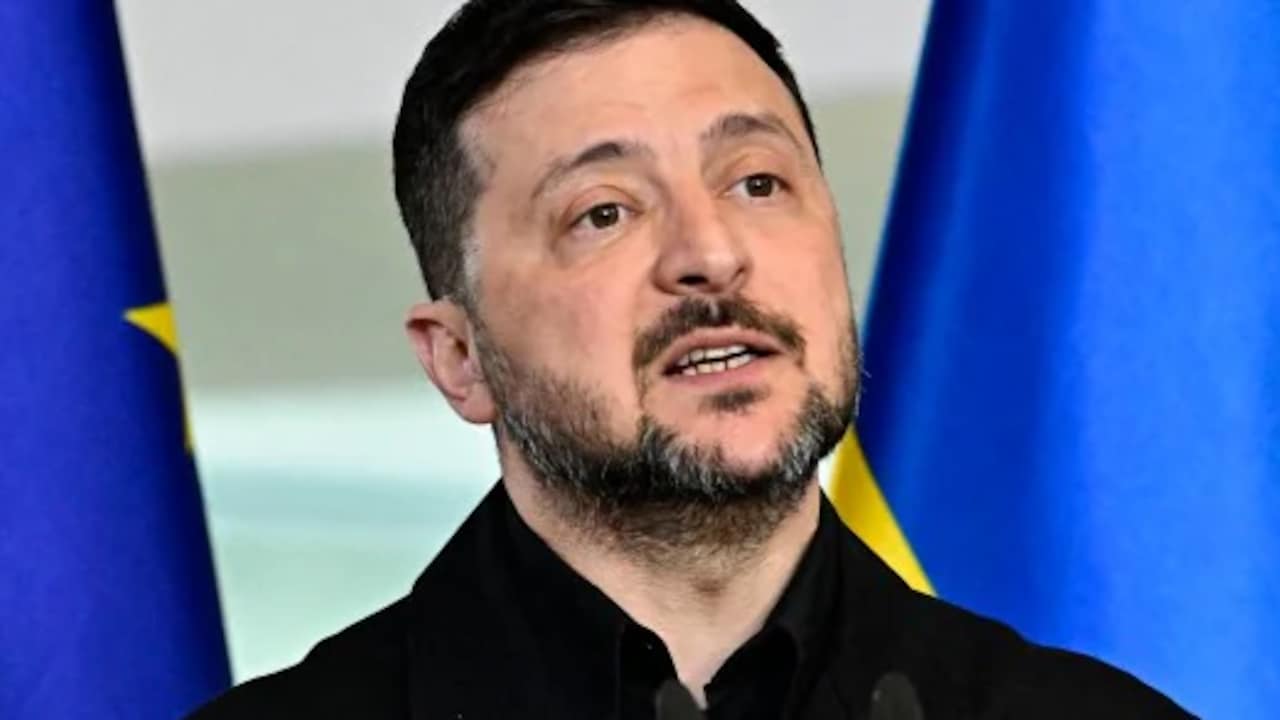
Return to menuBERLIN — The heads of three governments in the European Union were scheduled to travel Tuesday to the besieged Ukrainian capital to meet with President Volodymyr Zelensky.
In a Facebook post, the prime minister of the Czech Republic, Petr Fiala, said he would be in Kyiv along with Polish Prime Minister Mateusz Morawiecki and Slovenian Prime Minister Janez Jansa. The visit, he said, was meant to “confirm the unequivocal support of the entire European Union for the sovereignty and independence of Ukraine.” It would come two days after Russian missiles struck a military training base close to Ukraine’s border with Poland, a NATO member.
Fiala said the delegation, which was working in concert with E.U. authorities, would present a broad aid package for Ukraine.
Ukrainian presidential adviser says Moscow could run out of resources to continue war
Return to menuA senior Ukrainian adviser, Oleksiy Arestovich, outlined Monday a number of scenarios that he envisioned could end the war in Ukraine — one of them a prediction that it could be over as soon as “early May,” after he said Moscow would run out of resources.
Arestovich, an adviser to the Ukrainian president’s chief of staff, said the time frame for ending the war would depend on the amount of resources the Kremlin was willing to commit to the conflict.
“I think that no later than in May, early May, we should have a peace agreement. Maybe much earlier, we will see. I am talking about the latest possible dates,” Arestovich said in a video broadcast on Ukrainian television, Reuters reported.
“We are at a fork in the road now,” he said, adding that there would either be “a peace deal struck very quickly, within a week or two, with troop withdrawal and everything,” or a “round two” of Russia offensives.
He also said it was possible Russia would involve fighters from Syria to bolster its forces. Even if Kyiv and Moscow reached a peace deal, Arestovich did not rule out a continuation of small tactical clashes between the two sides in the future.
However, Arestovich has not been personally involved in official peace talks, which have so far yielded little. The talks resumed Tuesday after what Ukrainian negotiators on Monday described as a “technical pause.”
Pfizer says all of its profit in Russia will go to help Ukraine
Return to menuPfizer on Monday said it will donate all profits from its Russian subsidiary to causes that provide direct humanitarian support to Ukrainians.
In a statement, the New York-based drugmaker also said it would not initiate new clinical trials in Russia. Pfizer, which doesn’t own or operate production sites in Russia, will separately cease all planned investments with local suppliers that had aimed to build manufacturing capacity in the country.
But Pfizer said it would keep shipping critical medical supplies to Russia, including those needed to help patients suffering from cancer or cardiovascular problems.
“We cannot stop the flow of our medicines to Russia. Our medicines are medicines, not like an iPhone Pro, for example, or the new Mac,” Albert Bourla, Pfizer’s chief executive, said Tuesday during an interview with Yahoo Finance.
Pfizer made $81.3 billion in revenue last year. Less than 0.5 percent of that was made in Russia, Bourla said last week on CBS’s “Face the Nation.”
Last week, BioNTech, the German firm that co-developed a coronavirus vaccine with Pfizer, announced a donation of 1 million euros to a nonprofit organization providing refugee relief. Some 2.8 million people have fled Ukraine since Russia invaded last month, according to the United Nations.
‘Why are Europe and the U.S. holding back?’: Reporters answered your questions
Return to menuOver the weekend, Russian forces widened the scope of their attacks across Ukraine. As the war continued into its third week, Russian President Vladimir Putin rejected appeals from French and German leaders to de-escalate the attacks.
On Sunday, at least 35 people were killed and 134 injured after Russian missiles struck a Ukrainian military facility about 15 miles away from the border with Poland. A Pentagon spokesman said no U.S. service members were killed in the attack.
Post reporters Isabelle Khurshudyan, Max Bearak, Karoun Demirjian and Missy Ryan answered readers’ questions about the war on Monday. Isabelle and Max are reporting from Ukraine. Karoun and Missy, who cover the Pentagon and the State Department respectively, are based in Washington. Here are some of the questions they answered:
Russia is installing its own mayors, staging referendums to ‘subvert Ukrainian democracy,’ Britain says
Return to menuRussia is ramping up efforts to “subvert Ukrainian democracy” by installing its own mayors and seeking to stage a referendum in the Ukrainian city of Kherson in a bid to establish the Russian-occupied area as a “breakaway republic,” Britain’s Defense Ministry said Tuesday in its latest intelligence update.
The ministry also said Russian President Vladimir Putin was tightening political control on the country by replacing the Ukrainian mayor of Melitopol, Ivan Fedorov, with one of Russia’s own.
Fedorov was allegedly abducted by Russian soldiers last week, an act that Ukrainian President Volodymyr Zelensky branded “a crime against democracy.”
The intelligence update reported that there were “multiple demonstrations” across Ukraine in the cities of Kherson, Melitopol and Berdyansk — all of which are occupied by Russian forces. In Kherson, Russian troops fired shots into the air to try to disperse crowds of peaceful protesters.
Yevhen Matveyev, the mayor of Dniprorudne in southern Ukraine, was also reportedly abducted by Russian troops, the update said.
In an interview with the “BBC Breakfast” Tuesday, James Cleverly of Britain’s Foreign Office said that Russia’s “plan of attack is not working” — but as a result, more civilian areas are coming under attack.
He also referred to recent predictions from a Ukrainian presidential adviser that the war could end in May, saying such an estimate was “incredibly difficult” to make.
World must end dependence on Russian oil to stop Kremlin ‘bullying,’ Britain’s Boris Johnson says
Return to menuLONDON — British Prime Minister Boris Johnson urged world leaders to cut their dependence on Russian oil and gas to end the Kremlin’s “bullying,” in an op-ed published late Monday.
Johnson said world leaders made a “terrible mistake” in 2014, allowing Russian President Vladimir Putin to annex Crimea, “a huge chunk out of a sovereign country,” which set the stage for his current invasion of Ukraine.
“Economic relations did not just resume — they intensified, with the West taking more Russian gas than ever before, becoming more dependent on the goodwill of Putin,” he wrote. “So when he finally came to launch his vicious war in Ukraine, he knew the world would find it very hard to punish him. He knew that he had created an addiction.”
Johnson, writing in Britain’s Daily Telegraph, said the world “cannot go on like this” and be subject to “continuous blackmail.” The prime minister said energy resources were both a strength and a weakness for Putin and applauded the United States and European Union for efforts to ban imports of Russian oil.
Last week, President Biden said he was barring all imports of oil and natural gas from Russia, effective immediately. E.U. officials, meanwhile, unveiled a plan to cut Russian gas imports by about two-thirds this year.
Johnson also said that weaning off Russian oil, although “painful,” could allow more resources and political will for renewable energy initiatives to combat climate change.
“From the destruction of Aleppo, to the deadly use of Novichok on the streets of Salisbury, to the barbarism we are currently witnessing in Ukraine, Putin has been able to get away with too much for too long because he has encouraged and exploited a Western addiction to his oil and gas,” Johnson said. “That addiction must now end.”





 English (United States) ·
  Turkish (Turkey) ·