.png)
In the besieged southern city of Mariupol, Ukrainian officials said some 1,300 people remained trapped in the basement of a theatre struck by Russia on Wednesday. Around 130 people survived and evacuated what had been serving as a civilian safehouse, according to Ludmyla Denisova, the Ukrainian parliament’s human rights commissioner. Invading Russian troops have cut off badly needed supplies and sowed terror with apparent attacks on a children’s hospital, a university and more.
In the absence of major territorial advances, Russia — which has launched more than 1,000 missiles so far — is increasingly relying on sieges and unguided “dumb” bombs to wear cities and civilians down. The United Nations has confirmed 1,900 civilian casualties, including the deaths of 52 children, but its human rights agency and humanitarian groups have said the real tolls are far higher. The U.N. estimates that 55 children have fled Ukraine every minute.
President Biden and his Chinese counterpart Xi Jinping are set to speak at 9 a.m. Eastern time as concerns mount that Beijing will offer military equipment and aid to Moscow. The leaders of the world’s two largest economies “have a lot to discuss,” White House press secretary Jen Psaki told reporters Thursday, adding: “This is an opportunity for President Biden to assess where President Xi stands.”
But in a sign of worsening relations between Russia and former Soviet states, Latvia, Estonia, and Lithuania on Friday said they would be expelling a total of ten Russian diplomats from the Baltic nations.
Here’s what to know
Ukraine official says 130 rescued from Mariupol theater, but fate of 1,300 others remains unknown
Return to menuA Ukrainian official said 130 people have been rescued alive from a bombed theater in Mariupol — although the fate of an estimated 1,300 others who had been sheltering there remained unknown Friday.
The figures, which could not be independently verified, are the first concrete details about the number of survivors rescued from the theater, which Ukrainian officials say was devastated by a Russian airstrike Wednesday.
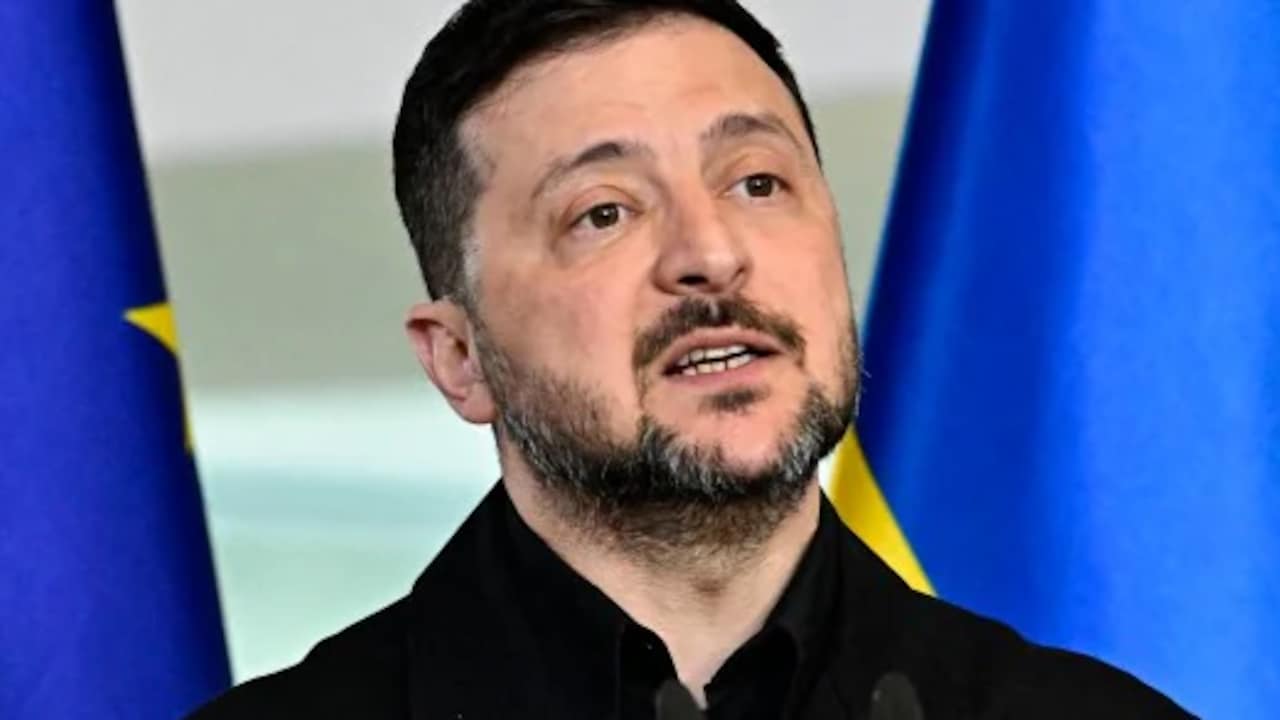
Ukraine’s human rights ombudswoman, Lyudmyla Denisova, told Ukrainian television that, according to her data, more than 1,300 people who were taking cover in a bomb shelter below the theater remained unaccounted for. Zelensky said “hundreds” of Mariupol residents were still under the theater’s ruins.
“We’ll continue the rescue work in spite of all difficulties,” he said Friday in a video shared on Telegram.
Information has been scarce because of the siege conditions in Mariupol, a strategic southeastern port city that has faced intense Russian attacks and has been largely cut off from the outside world for weeks. Satellite images from before the attack showed the word “children” written in Russian in large white letters on the ground on both sides of the theater.
Russian Foreign Ministry spokeswoman Maria Zakharova denied Thursday that Moscow had bombed the theater, calling it a “lie.”
Here’s the status of Ukrainian cities under Russian attack
Return to menuAs the Russian invasion of Ukraine enters its fourth week, Moscow is struggling to gain control of key cities while exacting a heavy toll on civilians — attacks that multiple world leaders say could amount to war crimes. Here are updates on some key places:
Dan Lamothe and Rachel Pannett contributed to this report.
Mental health experts turn to video conferencing to provide psychological support for Ukrainians
Return to menuThe parents came together online, signing on from their homes and temporary shelters across Ukraine to get guidance on helping their developmentally disabled children cope with war. From her New York office almost 5,000 miles away, a therapist addressed their starkest fears.
How to talk to children about death. What to do with an infant who is in shock. And how best to help children, like Irina Filonenko’s 10-year-old son, whose sensory disorders turn explosions and retreats to underground shelters into agonizing, tear-filled ordeals.
“He was crying and crying and crying,” said Filonenko, 46, who fled Kyiv for Poltava, 350 miles away, to seek refuge among relatives. “I used all my knowledge to support him and to explain what was happening,” said Filonenko, a dermatologist who retrained in psychology after her son was born.
The crisis in Ukraine has unleashed a network of online mental health experts, some refashioning routine virtual care in response to the war; others providing psychological first aid for refugees or support for local therapists who suddenly find themselves on the front line of an evolving mental health crisis.
Escaping Mariupol, a city under siege
Return to menuFor the last few weeks, dozens of residents of Mykola Trofymenko’s building spent most of their waking hours, and the dormant ones too, huddled together in the basement shelter, wondering when the food would run out. There was no electricity or heat, so they slept in their clothes. They gathered snow because there was no water and used it to refrigerate meat. The dust in the basement gave the children a persistent cough.
Outside was Mariupol, surrounded by Russian troops, pounding the city. The early part of the siege brought artillery shells and Grad rockets. Last week, warplanes joined the assault, dropping ordnance in what felt like 10-to-15-minute intervals. Trofymenko, the rector of Mariupol State University and a member of the city council, would venture out most days to tend to his many constituents as the city around him began to crumble or disappear.
“They bombed us without stop,” he said in a telephone interview. “It was a hell.”
He and his family left Tuesday, when officials announced the creation of a humanitarian corridors to Zaporizhzhia, a Ukrainian-controlled city about 120 miles away. His family — including his wife, son, mother-in-law and a dog — set out early Tuesday.
They encountered lines of cars that stretched for miles, as well as minefields and a dozen or so Russian checkpoints along the way. At one point, a car with four people inside was struck by shelling. At one of the checkpoints, a Russian soldier asked a barrage of questions — what he did for a living, whether he supported Ukrainian right-wing nationalists or “Nazism.”
“I told them I am totally against the Nazis,” he said. “I’m a university professor.”
Nick Osychenko left Mariupol the next day with six members of his family, he said in an interview. Airstrikes had damaged his house. The bodies of civilians lay on the road as they left the city. “There is no one to bury them,” he said. At a Russian checkpoint, Osychenko, the head of Mariupol TV, was also questioned about whether he was a “Nazi.”
“I do not know how they identify the Nazis,” he said. Soldiers checked the phones of passengers, to make sure there was “nothing patriotic,” no pictures of destruction in Mariupol and no photographs of military positions there. They looked at his right index finger, apparently looking for calluses that would indicate he was a soldier who regularly fired a weapon. “Thank God,” he said. “I didn’t have any.”
Many of their neighbors were staying behind — some by choice; some because they had elderly relatives or others they could not abandon. Osychenko said one of his neighbors, a woman, was staying to care for her 86-year-old mother who was bedridden. The two lived on the fifth floor, in an apartment with the windows blown out. Temperatures outside were freezing. Mother and daughter slept side by side, in the same bed, wearing long coats and hats. The woman was “desperate” to leave the country, “but she can’t leave her mom.”
“These are the stories,” Osychenko said.
Stocks turn negative in premarket trading as oil prices surge
Return to menuU.S. stocks were poised for a pullback Friday after notching three consecutive days of gains, and oil prices edged higher as traders kept wary watch on Ukraine.
Markets had been buoyed this week by the hope of a possible cease-fire ― the Dow is up 3.6 percent over the past week ― but Russia continued its assault. On Friday, futures linked to the Dow Jones industrial average fell 200 points, or 0.6 percent, while the broader S&P 500 index lost 0.7 percent and the tech-heavy Nasdaq dropped 0.8 percent.
Oil prices climbed, with Brent crude, the international benchmark, inching up near $107 a barrel. The U.S. benchmark, West Texas Intermediate, was trading near $103 per barrel. Prices have fallen significantly from recent surges that sent them beyond $130 per barrel.
The Ukraine war has weighed heavily on energy markets because Russia produces about 10 percent of the world’s oil supply, on par with the United States and Saudi Arabia. Surging energy costs tend to ripple quickly through the economy, adding heat to already high inflation and sticker shock at the gas pump, where the U.S. average for a gallon of gas was $4.27 on Friday, according to data from AAA. That’s a 4-cent drop since Monday but still nearly 75 cents higher than a month ago and $1.39 more than last year.
Rahm Emanuel, U.S. ambassador to Japan, says he’ll host ‘evacuees’ from Ukraine at his residence
Return to menuRahm Emanuel, a former Chicago mayor and newly minted American ambassador to Japan, said Friday that he would support the people of Ukraine by hosting families fleeing the country at his official residence in Tokyo.
Emanuel said in a statement that as the grandson of Ukrainian immigrants, he felt “a moral obligation” to help.
“These are unprecedented times which call for unprecedented actions,” he said. “In partnership with the Government of Japan, Amy and I have offered to host Ukrainian evacuee families at our official residence in Tokyo for a transitional period while more permanent housing is identified.”
The former White House chief of staff under President Barack Obama praised Japan’s government for offering accommodation to Ukrainians but added, “We would like to do our part, too.”
Japanese lawmaker Taro Kono tweeted Friday that Ukrainian President Volodymyr Zelensky would address Japan’s parliament online next week.
Emanuel also called for more humanitarian aid to those in need in the war-torn country and for corporations to continue to halt commercial operations in Russia. “I am deeply proud of how Americans and Japanese, whether in government or as individuals, have come together in the defense of Ukraine, and freedom, in this time of crisis,” he said.
Even Japan’s sushi makers are feeling the bite of Russia’s war
Return to menuTOKYO — Thousands of miles from the war in Ukraine, Japanese sushi restaurants and fish markets are feeling the pain of their country’s sanctions on Russia.
Prices of popular seafood and delicacies are soaring in Japan, a major importer of seafood from Russia, which sells salmon, crab, roe (fish eggs) and sea urchin at cheaper prices than those of sellers in Europe or Canada, or even some local fishermen.
But Japan’s limits on imports from Russia in response to its invasion of Ukraine have thrown a wrench into the seafood supply chain in the island nation, where seafood is a staple — exacerbating the economic woes Japanese restaurants and vendors have endured from the pandemic.
Seafood imports from Norway have also declined because of rerouted and canceled flights out of Europe after sanctions limited access to Russian airspace, according to Japanese media reports.
Kremlin slams Biden’s ‘irritability’ after he calls Putin ‘a murderous dictator’ in St. Patrick’s Day address
Return to menuPresident Biden continued to ramp up the rhetoric against Russian President Vladimir Putin, calling him a “murderous dictator” during an address Thursday in Washington to mark St. Patrick’s Day.
“I think we’re in an inflection point in history,” Biden said. “I think we’re in a genuine struggle between autocracies and democracies, and whether or not democracies can be sustained.”
He said nations were “standing together against a murderous dictator, a pure thug who is waging an immoral war against the people of Ukraine.” He added that “Putin is paying a big price for his aggression.”
The comments prompted the Kremlin to hit back Friday at the “personal insults” hurled at Putin.
“Given Mr. Biden’s irritability, his fatigue and sometimes forgetfulness … which ultimately leads to aggressive statements, we probably will not give any sharp assessments so as not to cause more aggression,” Kremlin spokesman Dmitry Peskov said in a conference call Friday.
Biden made headlines this week and angered Moscow after calling Putin a “war criminal” in a seemingly off-the-cuff response to a reporter’s question that came on the same day Ukrainian President Volodymyr Zelensky delivered an emphatic speech to Congress.
John Blaxland, a professor of international security and intelligence studies at Australian National University, said Biden’s comments could be perceived as a having a “rhetorical morale effect” and show he is taking leadership.
“It can actually be seen as a clever p


 English (United States) ·
  Turkish (Turkey) ·