.png)
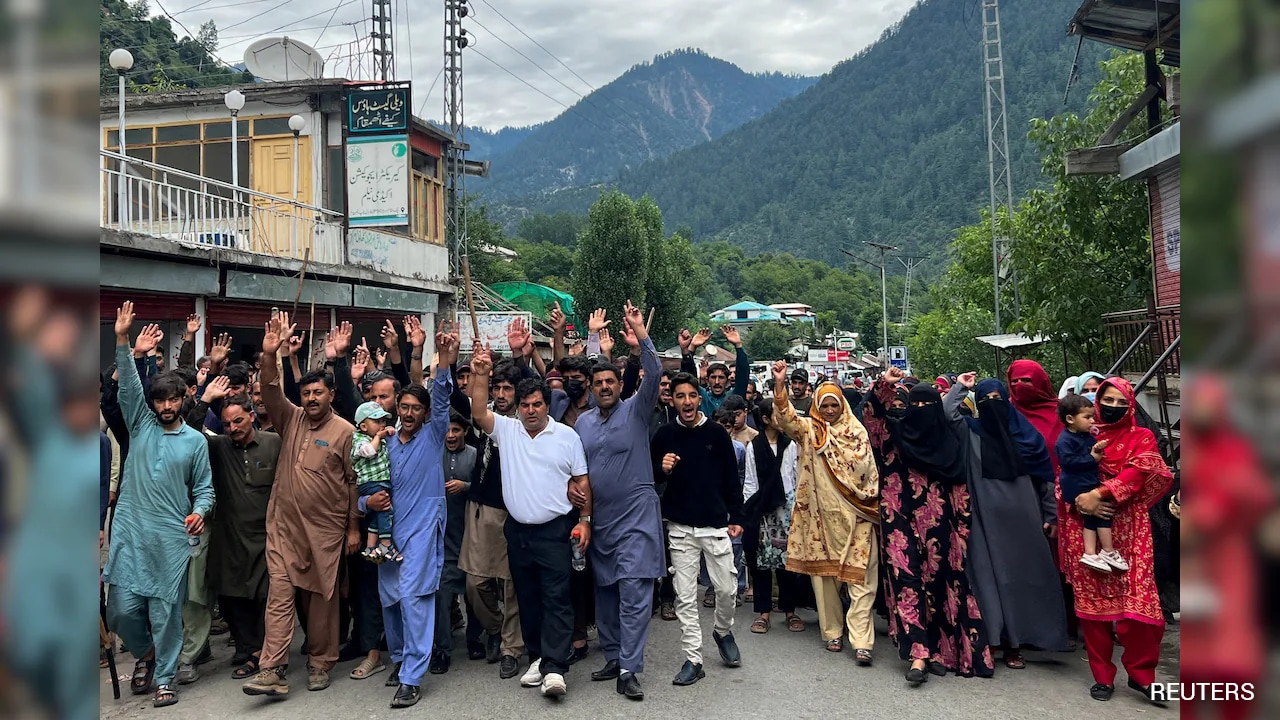
Photos showed flames billowing from rail cars in the northeastern state of Bihar and hundreds of people walking across train tracks there. Protesters in Patna, the state capital, burned tires and blocked roads in a strike called by student associations on Friday.
The violent scenes have drawn attention to joblessness that was worsening in India even before the coronavirus pandemic, as young people — particularly educated ones — struggle to find employment. Many are left helping their families with unpaid domestic tasks as they prepare to compete for a relatively small number of government jobs, according to the BBC.
This week’s unrest began with small-scale demonstrations on Monday, after young applicants seeking jobs in the government-run rail sector claimed that an entrance exam was being run unfairly.
Millions of people had applied for some 150,000 jobs with the railway in Bihar and neighboring Uttar Pradesh state, applicants told Reuters. Test results for different job categories showed the same names multiple times, and unsuccessful candidates say they felt unjustly excluded.
“The recruitment process has not been transparent, “Ashutosh Singh, a protester in Bihar, told Reuters. “A number of the selected candidates had their names in various categories, which is very unfair.”
This isn’t the first time the scramble for railway jobs has caused trouble. In 2018, India’s railway system announced a national recruitment drive for 63,000 of the most menial positions in its hierarchy — and 19 million people applied. Nearly all were college students or graduates, and some had master’s degrees.
Railway jobs are desirable because they can offer job security and a comparatively good salary, as well as perks such as free train travel. India’s railway sector employs more than 1.2 million people, according to Reuters.
The joblessness rate in India, Asia’s third-largest economy, stands at its highest in three decades, the BBC reported, exceeding those of other emerging economies. The unemployment was nearly 8 percent in December, according to the Center for Monitoring Indian Economy, an independent think tank. In Bihar, it was double that.
With a jobs crisis that has seen law graduates apply to become drivers, a railway job can seem like a golden ticket. And not receiving one has sparked acts of desperation.
Protesters this week lobbed stones at train cars and burned effigies of Prime Minister Narendra Modi, Al Jazeera reported. Rail services in Bihar were “severely” affected, NDTV news reported, after protesters clashed with security forces in the city of Gaya and set an empty train on fire. No injuries were reported from the fire, according to the Indian Express.
At least four people were arrested for vandalism and several others — including teachers of prominent institutes that coach students for the exams — have been arrested for inciting or taking part in violence, according to the Hindustan Times.
Authorities in Patna told Reuters that they have registered police complaints against 400 unnamed people and six coaching institutes.
The railway ministry said people found to have taken part in the vandalism and destruction of public property could be banned from applying for railway jobs, Reuters reported. The government suspended the exam and said a committee had been formed to examine candidates’ concerns.
An alliance of opposition parties in Bihar expressed support for students’ ongoing calls for protests, according to the Hindustan Times.
The police response to the protests has been criticized by activists and opposition politicians as heavy handed. Security forces have used batons and tear gas against protesters. And in Sitamarhi, a city in northern Bihar, police fired into the air to disperse demonstrators, NDTV reported.
Protests against alleged police brutality in Bihar also unfolded in New Delhi on Friday, led by the Indian Youth Congress and left-leaning All India Students’ Association.
Read more:





 English (United States) ·
  Turkish (Turkey) ·