.png)
But the junta is finding the spirit of Myanmarâs people is more indomitable than it may have calculated. Below the surface of a conflict that has seen the civilian body count climb to at least 1,500, according to recent United Nations figures, is a worrying fact for the generals: The fight is not going well for the Tatmadaw â Myanmarâs armed forces.
âI think thereâs no question the Tatmadaw is under pressure,â U.S. State Department Counselor Derek Chollet said at a forum on Myanmar this week. âI think things have not gone as well as perhaps they thought they would have a year ago. I think the fight is much harder. The resilience of Burmese society is much stronger.â
The coup last year ended a 10-year period of quasi-democracy bringing the country back to the dark days of military rule that it had previously suffered since 1962. As the junta seeks to reassert its authority through violence, Myanmar is on the verge of becoming a failed state.
The economy is crumbling along with the local currency, and the banking system is about to collapse. The health system has been battered by covid-19. The U.N. warns that more than 14.4 million people â including 5 million children â require humanitarian aid. Acute malnutrition has taken root in all but one of its 15 states and regions. In the chaos, foreign companies are leaving â including Chevron and French oil giant TotalEnergies.
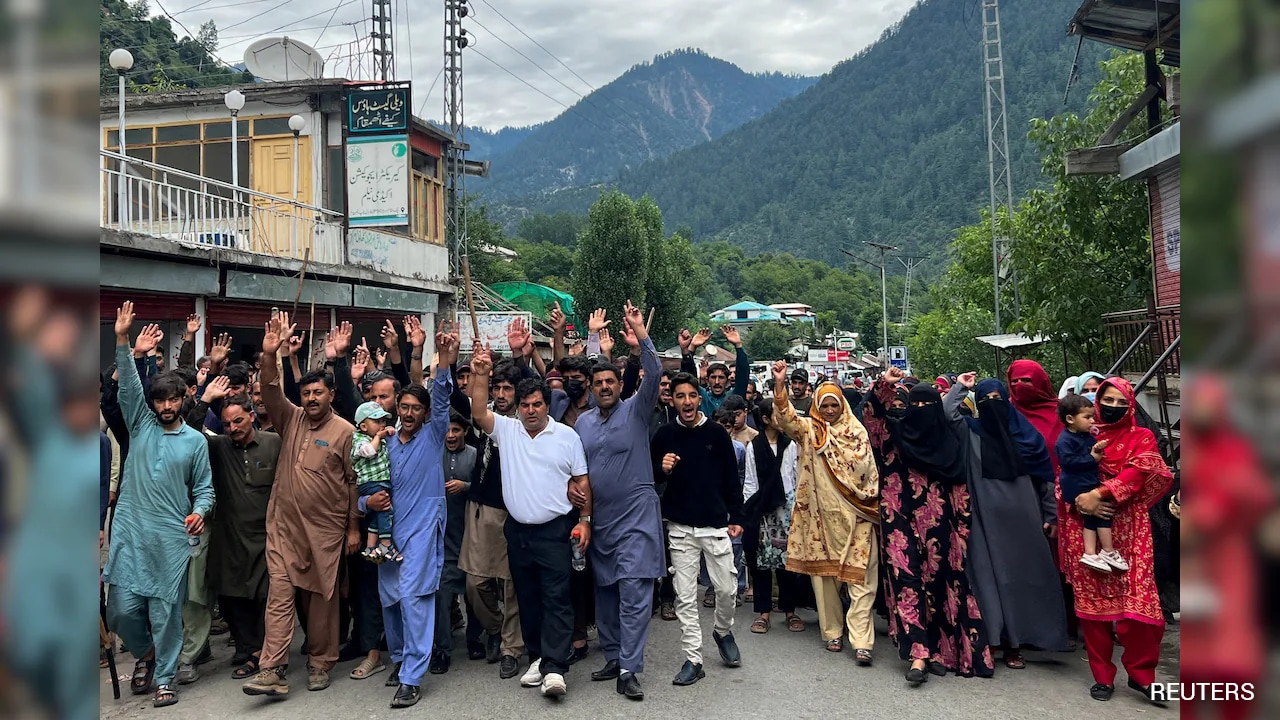
Worse for the junta is that the battlefield isnât going much better â with indications of military losses, a rash of desertions and the still-burning public will to protest. The military ordered dozens of arrests to clamp down on civil disobedience for the coupâs first anniversary. And yet, the countryâs citizens, unbowed, emptied the streets in towns and cities for what was dubbed âsilent strikes.â
But there was noise, too. An explosion went off during a procession of military supporters in the eastern border town of Tachileik, Reuters reported, killing two people â including one soldier â and wounding at least 30 others. It was another sign of a kind of growing resistance the military may not have anticipated.
âI think anybody arguing that the best way to remove the junta is somehow to negotiate right now is missing whatâs happening and on the ground,â Gregory Poling, director of Southeast Asia program at the Center for Strategic and International Studies, told me this week. âThe junta is at best in a stalemate, and a stalemate is bad for them. It stretches their resources. It damages their morale. Theyâre having an enormous problem with recruitment and are needing to bring back old retires to fight. The longer this goes on, the more it favors opposition forces.â
The military still rules the capital of Naypyidaw. But it is losing control elsewhere as the popular revolt against them grows, says Thitinan Pongsudhirak, who directs the Institute of Security and International Studies at Chulalongkorn University in Bangkok. In Nikkei Asia, he wrote of a massive difference between the military takeover in 1964 and the one that happened last year â which came after a decade of power sharing with a civilian government.
âAs the country opened up to the outside world, peopleâs expectations grew and opportunities widened, resulting in a powerful collective awakening that no generals can roll back no matter how hard they try,â he wrote.
The National Unity Government (NUG), an opposition alliance including members of the civilian government in exile and other armed civilian and ethnic groups, has succeeded in assassinating regime-linked government officials and military officers.
âThe battlefield balance in this makeshift guerrilla-style warfare is shifting as time wears on,â Pongsudhirak wrote. The military has hunkered for the long haul, but âits forces are overstretched and outmanned by anti-military regime fighters.â
Among the militaryâs rank and file, morale is low. At least 2,000 soldiers and police officers have deserted, some to join the resistance against the junta headed by Gen. Min Aung Hlaing, the New York Times reported.
Those numbers remain too small to suggest a bigger unraveling of the army, which possesses between 280,000 and 350,000 troops. But it does indicate a surprisingly large problem for the generals.
âNever have we seen defections at this level,â Moe Thuzar, co-coordinator of the Myanmar Studies Program at the Institute of Southeast Asian Studies in Singapore, told the Times. âWhat weâre seeing since February is this steady trickle of people leaving, and also publicly stating their support for the [Civil Disobedience Movement]. Thatâs unprecedented.â
Before the coup, the military was mired in dragging conflicts with ethnic militias. Some lost faith in the civilian government as Suu Kyi defended the armyâs persecution of the Rohingyas. But in the tradition of the enemy-of-my-enemy-is-my-friend, the militaryâs coup and ruthless campaigns have led to cooperation between at least some armed ethnic groups and the peopleâs defense forces backed by ousted civilian authorities. Meanwhile, powerful ethnic groups have used the broader conflict to make gains in key regions.
All of this is not to say that the resistance is poised to retake the country by muscle alone. The anti-junta forces remain too fractured, with complicated divisions still existing between militant ethnic groups and the broader resistance. The military far outnumbers and outguns the opposition, whose forces are one-third the size and, as the Economist notes, âare dispersed across the country and have not been knitted into any unified command structure.â
âVictory will not involve resistance troops marching on the capital,â the Economist declared.
That conclusion has ratcheted up calls for the United States and Europe to do more. Following a new round of sanctions this week (which Britain and Canada joined), Washington has in total targeted 65 individuals and 26 organizations tied to the junta, Chollet said. But thereâs a growing sense that the West, weary after adventures in Afghanistan and Syria, is unwilling to take on Myanmar in a more meaningful way, especially with the potential of war looming in Ukraine.
Instead, the consensus has been to largely relegate the Myanmar question to the less-than-decisive hands of the ASEAN group of nations, which is divided on how far to push and isolate the military rulers. Chinese interests are perhaps most vested in the outcome in Myanmar and have appeared to stick by the generals. But Beijing has been known to be pragmatic and may not necessarily cling to the generals should their grip decisively loosen.
This week in Foreign Policy, Rohingya human rights activist Wai Wai Nu called for ramped up international pressure against the junta and its businesses, a global arms embargo, an elevation of the issue to the U.N. Security Council and the referral of the juntaâs war crimes to the International Criminal Court.
But Myanmar is not necessarily seen as a strategic prize big enough to warrant great power competition on the scale witnessed in hot spots like Taiwan, Ukraine and Syria. And the resistance, observers say, can largely count on one thing â itself. And expanded unity among anti-junta factions will be key to denying the military the victory it seeks.
âMyanmar has always had the potential for a truly inclusive democracy, and our struggle to realize that potential is what unites us,â she wrote.
Read more:






 English (United States) ·
  Turkish (Turkey) ·