.png)
The meeting was one of several high-level diplomatic encounters on Monday focused on what Western officials believe could be a near-term Russian assault on Ukraine. Also on Monday, President Biden welcomed German Chancellor Olaf Scholz at the White House.
Putin, welcoming Macron at the Kremlin, thanked his French counterpart for his “persistent” role in addressing issues of European security, saying “France has been the most active participant in European security issues in recent decades.”
Earlier, Kremlin spokesman Dmitry Peskov played down hopes of a swift breakthrough on the standoff over Ukraine, saying that tensions persisted.
After a grim U.S. assessment reported this weekend that predicted high civilian casualties if Russia invades Ukraine, Peskov complained that U.S. and NATO leaders were refusing to accept Russia’s demands for security guarantees. Those demands include a ban on admission of Ukraine and other Eastern European countries to NATO and moves to roll back alliance forces and equipment from Eastern Europe and the Baltic states..
“Instead, they prefer a rather agitated discussion of what they call Russia’s future invasion of Ukraine,” Peskov said, speaking to journalists Monday. “We have been hearing daily statements on the topic from the United States and the European capitals,” he added, blaming Western leaders for the “tense” atmosphere.
Ahead of his meeting with Biden, Scholz promised a “united and decisive” response to any hostilities. It is his first White House visit since taking over from longtime German leader Angela Merkel in December.
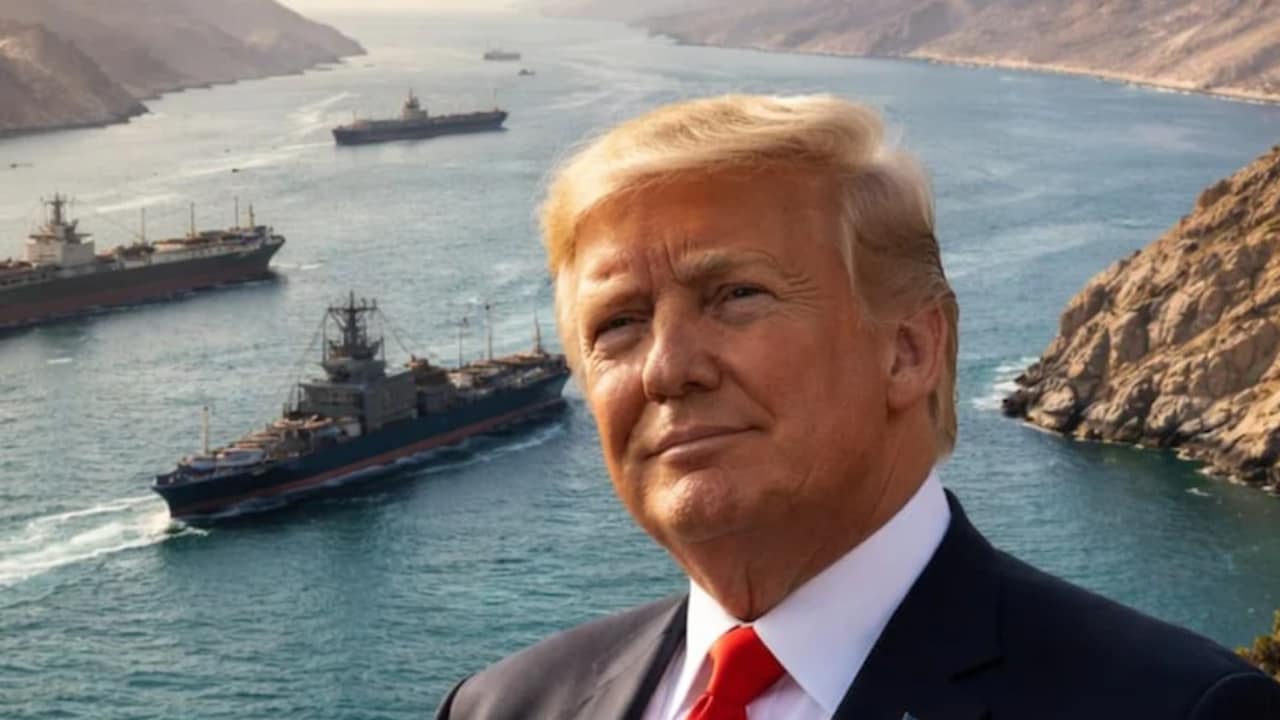
Russia began a military buildup near Ukraine in the fall. Its units have since moved closer to Ukraine’s borders, according to military analysts, and a flotilla of Russian warships including six amphibious assault vessels from the Baltic and Northern fleets gathered in the Mediterranean Sea ahead of massive Russian naval drills.
Putin has yet to take action over the U.S. and NATO rejection of Moscow’s security demands, and there is concern that the window for a diplomatic resolution is narrowing. U.S. and European officials have warned that Moscow will pay a massive cost in sanctions if it invades Ukraine; U.S. officials have warned that the buildup could lead to a lightning attack that seizes the Ukrainian capital in days and leaves as many as 50,000 civilians dead or injured.
Scholz has been under fire in Germany and from Ukraine, the United States and some NATO allies over his muted response to the crisis.
Macron, meanwhile, is trying revive the stalled 2015 Minsk peace agreement, a deal brokered by Berlin and Paris that has failed to end the eight-year war in eastern Ukraine between Kyiv’s forces and two Russian-backed separatist regions.
Putin insists in his talks with international leaders that Ukraine implement the deal and give autonomy to the regions, but Ukrainian President Volodymyr Zelensky has called for revisions.
The head of Ukraine’s security council, Oleksiy Danilov, last week warned the West against forcing Ukraine to implement the deal on Russian terms. Danilov said it would spark protests and chaos, destabilizing the nation and benefiting Moscow.
Macron will travel to Kyiv, the Ukrainian capital, on Tuesday to meet with Zelensky. Scholz is due to travel to Kyiv on Feb. 14 and Moscow a day later.
Speaking at a joint press conference Monday after meeting with his German counterpart, Annalena Baerbock, Ukrainian foreign minister Dmytro Kuleba acknowledged significant differences between the two countries but pledged “to find a common ground.”
Among other things, Ukraine has decried Germany’s refusal to supply lethal weapons to Kyiv as well as blocking other countries from transferring German arms and equipment to Ukraine. Berlin’s policy does not allow weapons of German origin to be exported to crisis regions. So far, Germany has offered Kyiv 5,000 protective helmets.
Saying he and Baerbock discussed Ukraine’s “defense and security,” Kuleba said their conversation was not just about "what Germany cannot do for one reason or another,” but also about what Germany “can do and intends to do” to support Ukraine.
"I think that today we have found common ground and a draft solution,” he said. “Now I will wait for the steps of the German government.”
Baerbock, who was making her second trip to Kyiv in three weeks, assured Germany’s support for Ukraine, saying that “no one will succeed in driving a wedge” between the two countries and promising a “series of tough measures” against Russia if Moscow chose to escalate the conflict with Ukraine.
“The ball is in Moscow’s court,” Baerbock said. “It’s up to [the Russians] to defuse the situation.”
Baerbock also acknowledged that economic sanctions against Russia could have financial repercussions in other countries, but said Berlin was prepared “to pay a high economic price” because Ukraine’s security “was at stake.”
Earlier Monday, Kuleba said the only acceptable de-escalation would be Russia withdrawing troops amassed along the border.
“A single withdrawal doesn’t mean de-escalation,” he said. “So we need to see that everything that has been amassed along our border in the last year is steadily being withdrawn. That will be a clear message of de-escalation.”
In an interview with The Washington Post, Scholz on Sunday rebutted claims that his government has not done enough, after Berlin drew scorn from Kyiv for sending helmets to help with self-defense as the United States and other NATO members sent lethal weapons, warships and military jets.
“The reality is that Germany is the biggest NATO partner in continental Europe,” with the largest defense budget on the continent, Scholz said, adding that Berlin is “the strongest economic supporter of Ukraine.”
Berlin’s stance on sending arms, Scholz said Sunday, was consistent with its long-standing restrictions on exporting weapons into crisis regions.
Scholz affirmed Germany’s willingness to consider blocking the operations of the controversial Nord Stream 2 gas pipeline — which will deepen Berlin’s reliance on Moscow — as part of any Western sanctions against Russia in event of an invasion.
“It is absolutely clear that in a situation like this, all options are on the table,” he said. “I will not get into any specifics, but our answer will be united and decisive.”
The pipeline deal has been the focus of debate in Congress over a package of sanctions aimed at Moscow, with Republicans arguing that the Biden administration needs to take a tougher stance with Germany on going into business with Russia.
As diplomatic efforts ramp up, Moscow’s view of British diplomacy over Ukraine is increasingly chilly. Russia’s ambassador to Britain, Andrei Kelin, said Monday it was doubtful that upcoming visits to Moscow by British Foreign Secretary Liz Truss and Defense Secretary Ben Wallace would be useful, given their warnings of tough sanctions on Russia.
“If it comes to that, we do not have much interest in such a conversation,” Kelin said, speaking to the Interfax news agency. He said he saw no willingness from Britain to seriously engage on Russia’s security demands.
Wallace recently critiqued Putin’s long July essay on Ukraine as “short on accuracy and long on contradictions.” (Putin’s essay argued that Russians and Ukrainians were “one people.”) Truss recently warned of tough sanctions against Russian oligarchs and those keeping the Kremlin in power, should Russia invade Ukraine.
Over the weekend, senior Russian officials dismissed new U.S. intelligence reports that Putin has in place about 70 percent of the combat forces needed for a full-scale attack on the Ukrainian capital, calling the reports “madness and scaremongering.”
Kuleba tweeted Sunday that people should not believe “apocalyptic predictions” but said the country was ready for any outcome. “Today, Ukraine has a strong army, unprecedented international support and Ukrainians’ faith in their country,” he said.
Moscow has denied that it intends to invade Ukraine but has made clear it considers the presence of Western troops and weapons in the former Soviet sphere an unacceptable security threat. The White House has said the United States does not have information that Putin has made a decision to invade.
Even so, satellite imagery and other intelligence indicate Putin has massed more than 100,000 troops and equipment on the border with Ukraine — one Western security official put the troop strength at 130,000 — potentially positioning for what could become the largest land offensive in Europe since World War II.
U.S. officials are concerned that a massive Russian-Belarusian military exercise, set to begin Thursday, could be used as part of a multi-pronged invasion of Ukraine. As part of the exercise, Russian troops and equipment have traveled more than 6,000 miles to Belarus and Russia has deployed advanced missile systems, fighter planes and bombers. Belarusian President Alexander Lukashenko has been playing a key role in Russia’s saber-rattling against Ukraine.
Former Ukraine defense minister Andriy Zagorodnyuk said Sunday the situation looked “pretty dire,” with sufficient Russian forces in place to seize Kyiv or another Ukrainian city, although not enough to occupy the entire country.
“Russia could now seize any city in Ukraine,” he told Britain’s Guardian newspaper. “But we still don’t see the 200,000 troops needed for a full-scale invasion.”
Souad Mekhennet in Washington and David L. Stern in Kyiv contributed to this report.






 English (United States) ·
  Turkish (Turkey) ·