.png)
The two Mi-8 helicopters tore across enemy territory early on the morning of March 21, startling the Russian soldiers below. Inside were Ukrainian Special Forces fighters carrying crates of Stinger and Javelin missiles, as well as a satellite internet system. They were flying barely 20 feet above ground into the hottest combat zone in the war.
Ukraine’s top generals had conceived the flights as a daring, possibly doomed, mission. A band of Ukrainian soldiers, running low on ammunition and largely without any communications, was holed up in a sprawling steel factory in the besieged city of Mariupol. The soldiers were surrounded by a massive Russian force and on the verge of annihilation.
The plan called for the Mi-8s to land at the factory, swap their cargo for wounded soldiers, and fly back to central Ukraine. Most everyone understood that the city and its defenders were lost. But the weapons would allow the soldiers to frustrate the Russian forces for a few weeks more, blunting the onslaught faced by Ukrainian troops elsewhere on the southern and eastern fronts and giving them time to prepare for a new Russian offensive there.
“It was so important to the guys, who were fully encircled, to know that we had not abandoned them, that we would fly to them, risking our lives to take their wounded and bring them ammunition and medicine,” said a military intelligence officer with the call sign Flint, who was on the first flight and described the operation to The New York Times, along with three others involved. “This was our main goal.”
As the two Mi-8s drew closer, they banked hard over the Sea of Azov, flying just above the water’s surface to avoid Russian radar. Then it appeared, the Azovstal Iron and Steel Works, the last bastion of the Ukrainian defenders. In a video from the flight, Azovstal looms like a besieged industrial fortress, bathed in early morning sunlight.
Beyond it was Mariupol, a city reduced in less than four weeks to a smoldering shell. Corpses littered the streets, while the living, those who remained, were mostly below ground, hungry and scared, emerging from basements only to scrounge for water and food.
“It was a sad sight,” said Flint, who was on the lead helicopter. “It was already mostly in ruins.”
The Prize

For the Kremlin, Mariupol was a prize.
Barely had President Vladimir V. Putin of Russia given the order to invade Ukraine, on Feb. 24, when Russian soldiers began pouring over the border in tanks and armored vehicles, rolling toward the city, a strategic port on the Sea of Azov. Missiles streaked through the pre-dawn darkness, slamming into apartment buildings and wounding the first civilians of the war.
That morning, the general director of Azovstal, an industrial behemoth with more than 11,000 workers, convened his board. The director, Enver Tskitishvili, went on a war footing, deciding to power down the blast furnaces and cease operations for the first time since World War II.
Then the board made a decision that would shape the battle for eastern Ukraine.
Deep beneath the steel plant were 36 bomb shelters, a legacy of the Cold War. The shelters, some more than 20 feet underground, had enough food to feed thousands of people for several weeks. Believing the fighting would not last long, Mr. Tskitishvili and the other executives saw the plant as a sanctuary and invited employees to come there with their families.
Destruction at the Azovstal Steel Plant
Satellite images from Planet Labs show the scale of the damage to the steel plant that served as one of the last refuges for Ukrainian fighters in Mariupol. Numbered areas are shown in detail below the main image. Red circles indicate shelters.

500 feet
RAIL FASTENING
WORKSHOP
Damaged
buildings
Collapsed
pedestrian
bridge
Craters from
shelling
Gas shop
shelter
COMMUNITY
CENTER
KALMIUS RIVER
Rail
workshop
shelter
Damaged
roofs
Shell
craters
Damaged
buildings
Shelter
CONVERTER
PLANT
Converter
shop
shelter
CAFETERIA
Shell
craters
Collapsed
pedestrian
bridge
Destroyed
buildings
NABEREZHNA ST.
AZOVSTAL
COMBINED WORKS
BUILDING
Shell
craters
FURNACES
Shell
craters
IRON
CASTING
PLOT
Collapsed
pedestrian
bridge
FURNACES
N
Converter plant
Eastern building
Cafeteria
Before
After
1
2
3
Western buildings
Azovstal Combined Works building
Western access bridges
4
5
6

500 feet
RAIL
FASTENING
WORKSHOP
Damaged
buildings
Craters from
shelling
Collapsed
pedestrian
bridge
Gas shop
shelter
COMMUNITY
CENTER
KALMIUS RIVER
Rail
workshop
shelter
Damaged
roofs
Shell
craters
Damaged
buildings
Shelter
CONVERTER
PLANT
Converter
shop
shelter
CAFETERIA
Shell
craters
Collapsed
pedestrian
bridge
Destroyed
buildings
NABEREZHNA ST.
AZOVSTAL
COMBINED WORKS
BUILDING
Shell
craters
FURNACES
Shell
craters
IRON
CASTING
PLOT
FURNACES
Collapsed
pedestrian
bridge
N
Eastern building
Converter plant
Cafeteria
Before
After
1
2
3
Western buildings
Azovstal Combined Works building
Western access bridges
4
5
6

¼ mile
Gas shop
shelter
Shelters
Destroyed
buildings
Converter
shop
shelter
CAFETERIA
NABEREZHNA ST.
AZOVSTAL
COMBINED
WORKS
BUILDING
Craters from
shelling
FURNACES
IRON
CASTING
PLOT
FURNACES
N
Eastern building
Before
After
1
Converter plant
2
Cafeteria
3
Azovstal Combined Works building
4
Western buildings
5
Western access bridges
6
Sources: Planet Labs (images showing destruction, taken May 1, 2022); Google (prewar images, taken July 5, 2020)
By Marco Hernandez
What Mr. Tskitishvili did not know was that Ukraine’s military was also arriving at Azovstal. To the Ukrainian soldiers, the plant was a stronghold, surrounded on three sides by water, ringed by high walls, as seemingly impregnable as a medieval keep. It was the perfect place to make a last stand.
“The military never told us, and we never supposed that they would deploy with us,” Mr. Tskitishvili said in an interview. “We planned only for the civilian population, and only as refuge from attack. We did not consider ourselves to be participants in the war.”
For the next 80 days, Azovstal would be a fulcrum of the war, as Russian brutality collided with Ukrainian resistance. What began as an accident — civilians and soldiers barricaded together inside an industrial complex nearly twice as large as Midtown Manhattan — became a bloody siege as roughly 3,000 Ukrainian fighters kept a vastly larger Russian force bogged down in a quagmire that brought misery and death on both sides.
Mariupol stood in the way of one of Mr. Putin’s key aims: the creation of a land bridge linking Russian territory to Crimea, the strategic peninsula in southern Ukraine that Russia annexed in 2014. But the fight also fit the Kremlin’s war narrative. Though several military groups were at Azovstal, many of its defenders were members of the Azov Regiment, a strongly nationalistic group of fighters whose fame in Ukraine and early connections to far-right political figures have been used by the Kremlin to falsely depict the entire country as fascist.

Destroying them was central to the Kremlin’s often-repeated goal of “denazifying” Ukraine.
In Ukraine, the battle for Azovstal has already become legend, though a comprehensive account of the siege and the struggle for survival by the troops and civilians inside has been slow to emerge. Dozens of interviews conducted by The Times with defenders and civilians who were at Azovstal, including soldiers who were captured and later released by Russia, along with top military officials and international arbiters involved in negotiating evacuations, paint a picture of an apocalyptic siege that became Ukraine’s version of the Alamo.
In a war largely fought by anonymous soldiers far from the cameras, commanders and regular fighters at Azovstal spoke to journalists and beamed video testimonials to the world on Telegram. Capt. Svyatoslav Palamar, the deputy commander of the Azov Regiment at the plant, spent his days and nights fighting above ground, then broadcast his impressions in video messages when he retreated to the bunkers beneath Azovstal.
“We have fought with a group that is many times stronger than we are and have tied them down and not let them move further into Ukrainian territory,” Captain Palamar said in a telephone interview from Azovstal in late April. “But at the same time, the situation is difficult, actually critical.”
Ultimately, Azovstal became a trap. The presence of civilians hampered the soldiers’ ability to defend themselves. The presence of soldiers meant the civilians had to endure a vicious siege as food and clean water ran out.
Natalya Babeush, who worked as a high-pressure boiler operator at the plant before seeking refuge in one of the shelters, described a hunger so pernicious that children began to draw pictures of pizza and cake. As a volunteer cook for her bunker, she went above ground each day to prepare meals of thin soup and fried dough on a makeshift stove constructed of brick and metal gratings, as jets flew overhead dropping bombs.
Twice her kitchen was blown up by Russian rockets.
“You’d hear a jet, grab your frying pan and run to hide, counting how many bombs the plane dropped,” she said. “When it’s flying there above your head and all around there are explosions, you understand that your life is simply, well, it’s not worth anything.”
‘I Thought I Was Safe’
To Ms. Babeush and many others, Azovstal meant family. Her brother worked there. So did her husband. Generations of Mariupol families had worked at the plant since it opened in 1933, when Ukraine was part of Stalin’s Soviet Union. Later, when World War II left the plant in ruins, citizens of Mariupol made donations to help rebuild it.
“For people, especially after the war, the factory was a lifeline in terms of work, in terms of stability,” Ms. Babeush said. “Even before this war, there really wasn’t any other kind of work except for work in the factories.”
Unlike other industrial relics of that era, Azovstal thrived long after the Soviet Union collapsed. Metal from its furnaces was used for the protective sarcophagus around the damaged Chernobyl nuclear plant, as well as for more recent projects including Hudson Yards in New York, the Shard in London and Apple’s headquarters in California.
But Azovstal sat along one of the world’s bloodiest geostrategic fault lines. In 2014, when Russia annexed Crimea, Russian troops together with local separatists seized surrounding territory in the eastern Donbas region. The separatists occupied Mariupol for weeks before pro-Ukrainian forces, including Azov fighters, pushed them out.
For several years, as the war in the Donbas simmered, Azovstal executives ordered employees to revamp the decaying bomb shelters and stock them with food and water. Mariupol was only a few miles from the “contact line” that demarcated the territory controlled by the separatists.
“For eight years, we had become accustomed in Mariupol to explosions from time to time,” said Mr. Tskitishvili, the plant’s general manager. “We often heard shells explode — we heard the fighting and so we grew used to it.”
But that changed on Feb. 24 when Russian forces invaded the entire country.
Senior Sgt. Sergei Medyanyk, a soldier with the Azov Regiment, was at his barracks outside of Mariupol. His wife, Yulia Polyakova, a soldier with Ukraine’s National Guard, was at their home in the city. Both were woken at 4 a.m. and ordered to prepare for war.
“We did not really understand what was happening,” Sergeant Medyanyk said. “We thought maybe it was a training exercise.”
Better Understand the Russia-Ukraine War
History: Here’s what to know about Russia and Ukraine’s relationship and the causes of the conflict.On the Ground: Russian and Ukrainian forces are using a bevy of weapons as a deadly war of attrition grinds on in eastern Ukraine.Outside Pressures: Governments, sports organizations and businesses are taking steps to punish Russia. Here is a list of companies that have pulled out of the country.Updates: To receive the latest updates in your inbox, sign up here. The Times has also launched a Telegram channel to make its journalism more accessible around the world.Anna Zaitseva and her husband, Kirill, who worked at Azovstal, bundled their infant son and rushed to take shelter at the factory. She had been so stressed during the Russian military buildup before the war, she said, that she had stopped lactating.
“We came to the shelter,” she recalled, “and took with us only what was necessary, like very big blankets, some food, water, documents and some baby formula.”
Ms. Babeush initially refused to leave her home, even as the rockets began striking nearby apartment buildings and cars burned on the streets. By March 2, the city no longer had working electricity, water or cellphone service, and Ms. Babeush and her husband finally fled on foot to Azovstal, taking cover from shelling every few minutes.
Ms. Babeush took up residence in a bunker below the rail and beam shop where her husband worked, fashioning a bed out of planks, some rubber sheeting and rags.
“That first night was the first time in a while that I slept,” she said. “Honestly, I thought I was safe.”
A City Within a City
Russia’s military hit so hard and so fast that Ukrainian defenses along Mariupol’s perimeter melted within days.
Sergeant Medyanyk was manning a Soviet-era vehicle armed with a small-caliber machine gun when an enormous column of Russian tanks, escorted by fighter jets, bore down on his position.
“This was my war baptism,” he said. “We had nothing to use against aviation, and so to avoid losses, we did what we could and fell back.”
Almost no one thought Ukraine had a chance. But in many cities, the Ukrainian military fought the invaders to a standstill, spoiling the Kremlin’s plans to quickly seize the capital, Kyiv, and halting an advance along Ukraine’s southern Black Sea coast toward Odesa.
Mariupol was different. Russian troops lunged from two directions, closing the city in a vise, routing Ukrainian soldiers in the first few weeks, and pushing them back to the sea and toward Azovstal. Soldiers from different units arrived at the factory, and Captain Palamar and other Azov officers set up a command center.
“We moved and moved and moved toward the territory of the factory because it was the only place that remained,” Captain Palamar said in an interview.
Assessing the Damage Across Mariupol
An analysis by The New York Times of satellite data collected before and during the war found many buildings that were most likely destroyed or significantly damaged this year.

UKRAINE
Mariupol
KALMIUSKYI
DISTRICT
Kalynivka
Damaged hospital
MARIUPOL
Prymiske
LIVOBEREZHNYI
DISTRICT
Damaged
hospital
Ahrobaza
Azovstal Steel Plant
PRYMORSKYI
DISTRICT
Sea of Azov
1 mile
March 24-April 5
April 5-17
April 17-29
April 29-May 11
May 11-23
May 23-June 4
Azovstal Steel Plant

UKRAINE
Mariupol
KALMIUSKYI
DISTRICT
Kalynivka
Damaged hospital
Prymiske
MARIUPOL
LIVOBEREZHNYI
DISTRICT
Damaged
hospital
Azovstal Steel Plant
PRYMORSKI
DISTRICT
Sea of Azov
1 mile
March 24-April 5
April 5-17
April 17-29
April 29-May 11
May 11-23
May 23-June 4
Azovstal Steel Plant

1 mile
KALMIUSKYI
DISTRICT
Staryi Krym
Damaged
hospital
MARIUPOL
Damaged
hospital
Azovstal Steel Plant
PRYMORSKI
DISTRICT
UKRAINE
Sea of Azov
Mariupol
March 24-April 5
April 5-17
April 17-29
Azovstal Steel Plant
April 29-May 11
May 11-23
May 23-June 4
Note: The red areas on the main map show estimates of significant change to building shapes based on data collected between Feb. 4 and May 27.
Sources: European Space Agency, Sentinel-1 (radar data); OpenStreetMap (building data)
By Marco Hernandez
The city itself was collateral damage. Snow disappeared from courtyards as people gathered it for drinking water. Residents cooked outdoors on wood-fired stoves, ducking into basements when Russian jets flew overhead.
“After a direct hit from those shells, nothing remains,” said Elina Tsybulchenko, who fled on foot to Azovstal with her family and two dogs. “Everything inside burns and explodes into small pieces, flying in all directions, and disintegrates as if there was nothing ever there, not people, furniture, not appliances or walls or plumbing. It all just disappears.”
Soon, Azovstal began filling up with civilians who did not know that elsewhere on the vast grounds, soldiers were arriving, too. “If I had known there would be soldiers,” Ms. Tsybulchenko said, “we would have perhaps looked for another place to hide.”
But by early March, several thousand Ukrainian troops had converged inside Azovstal, and soldiers and civilians realized they were sharing the same refuge. Communications to the outside world were cut as Russian forces steadily took all but a few pockets of the city.
“The encirclement was so dense there was no possibility to reach them,” said Flint, the Ukrainian military intelligence officer, “either by land or by the Azov Sea, which was fully controlled by the Russian Navy.”
But Ukrainian fighters were still slipping into Mariupol. Bohdan Tsymbal, an Azov junior sergeant, staged lighting raids with his artillery unit to skirmish with Russian fighters and gather supplies for the civilians inside the plant. He and his older brother, Anton, had joined Azov right out of school. They were boys when their nearby village was occupied by separatists in 2014, and it was the Azov troops who liberated them.
“These guys gave up their lives and their health to free my village from these scoundrels,” said Sergeant Tsymbal, 20. “That’s why I chose this path.”
On one of the raids, Sergeant Tsymbal’s unit slipped out of Azovstal and came under heavy fire. He was struck several times. For nearly 90 minutes, he lay bleeding in the rubble, not far from the factory, before he was rescued and taken to the makeshift field hospital inside Azovstal. Medics operated on him in the dim light of a bunker.
Azovstal was becoming a horror show. Civilians and soldiers were short of food, weapons and medicine to treat dozens of wounded troops. Soldiers were dying from even minor wounds.
There was no way out.
The question was whether there was a way in.
Operation Air Corridor

The two Mi-8 helicopters navigated through the loading cranes of Mariupol’s port and descended into the Azovstal complex. Flint, the intelligence officer, jumped out with the Special Forces team and quickly began offloading green crates of weapons and ammunition.
Soldiers wrapped in blankets and sleeping bags, some missing arms and legs, were hoisted into the helicopters, whose rotors never stopped spinning. They lifted off with eight or nine wounded fighters that day, Flint said, some of whom were conscious enough to show off cellphone videos of the intense fighting they had endured.
The March 21 mission, captured on videos provided by Flint, lasted only 20 minutes on the ground. “There was just this feeling of happiness, emotional satisfaction that we were able to get these guys out,” Flint said.
In all, Operation Air Corridor, as the effort was known to participants, managed to land helicopters at Azovstal seven times during the next two weeks and rescue 85 gravely wounded soldiers, Flint said. A heavily sedated Sergeant Tsymbal was among those evacuated.
Live Updates: Russia-Ukraine War
But the helicopters also brought in other soldiers, mostly volunteers, including Pvt. Nikita Zherdev of the Azov Regiment. His father had died in the shelling of Mariupol weeks earlier, and he wrote his sister before taking off telling her to learn to take care of herself. He did not tell her what he thought: that he did not expect to leave alive.
“As soon as we landed at Azovstal, I understood that, wow, things are really happening here,” he said. “Everything was covered in smoke. Everything was under fire. The people who greeted us, shouted, ‘Faster, faster, faster — there are airstrikes every five minutes, the jets are coming.’”
A native of Mariupol, Private Zherdev already knew the troops at Azovstal, but the men he found were withered specters of those soldiers, hungry and exhausted and covered in blood and gun oil after weeks of constant fighting. They were shocked to see him.
“You see what’s happening,” he recalled one soldier telling him. “Why do you want to die here with us?”
The city many of them saw now was an incomprehensible horror. Several fighters described streets littered with corpses that were being devoured by starving cats and dogs.
“I love cats,” said Ruslan, a fighter who arrived on a helicopter in April. “I didn’t know that a cat, when it’s hungry, could eat a person.”
Losses were heavy. Private Zherdev said his top commander and another officer were killed by Russian fire on the second day. Private Zherdev lasted seven. He was sprayed with shrapnel from a rocket-propelled grenade, and one large piece lodged in the nape of his neck, threatening to paralyze or kill him if he moved.
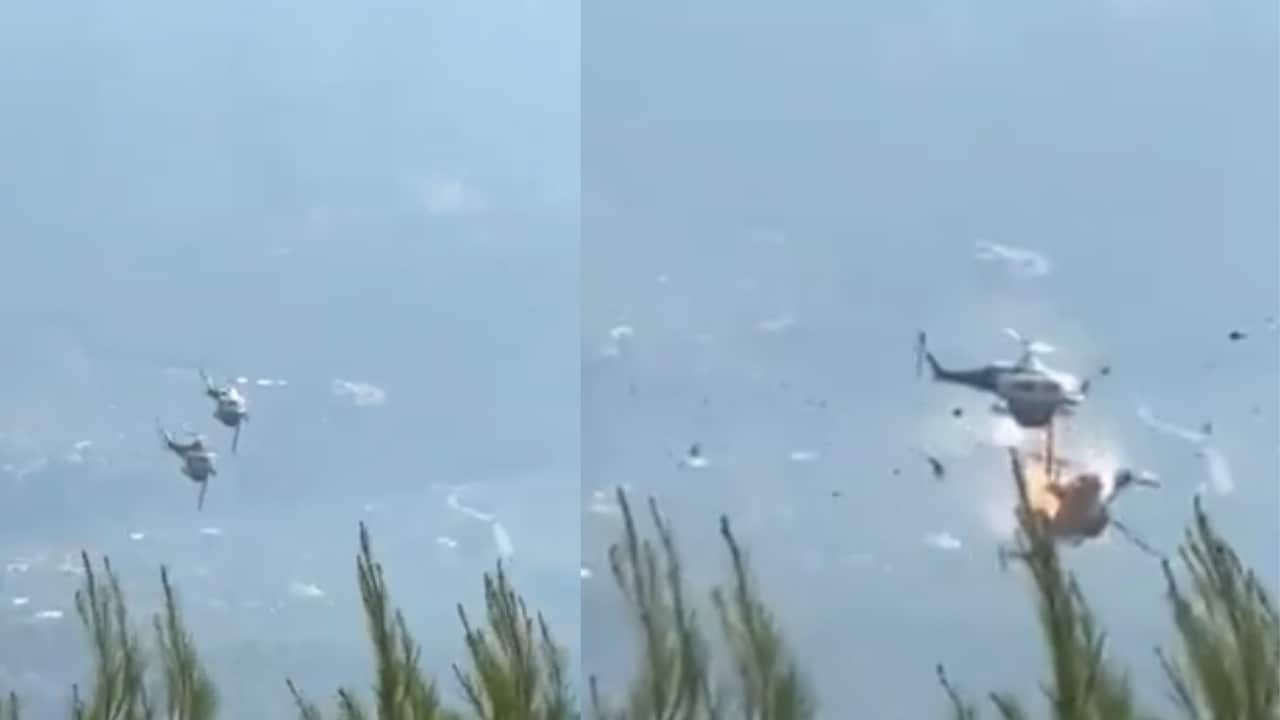
What saved him were the helicopters, which were still flying, barely. As his rescue helicopter lifted off, Private Zherdev recalled a loud pop and an explosion as a Russian rocket slammed into its fuselage. Somehow it remained aloft, but a second helicopter was knocked out of the sky, along with the wounded soldiers onboard, he said.
When he landed back in Ukrainian-held territory, Private Zherdev managed to record a video of his helicopter, its fuselage shredded and blackened by the explosion. It had made it back with one engine.
Another helicopter went out on April 7 and was hit by Russian ordnance only a few miles from Ukrainian territory, said Gen. Kyrylo Budanov, the commander of Ukraine’s military intelligence service, who oversaw the helicopter operation. A rescue helicopter sent to look for survivors was also shot down, and the four Special Forces troops on board were killed along with its crew, he said.
After that, Operation Air Corridor ended, General Budanov said. But it helped the forces at Azovstal withstand the Russian onslaught for more than a month longer.
“Isolated and surrounded, they fought,” General Budanov said in an interview. “We brought them all we could, but, you understand, not as much as was necessary.”
What





 English (United States) ·
  Turkish (Turkey) ·