.png)
For three weeks, what are known as Russiaâs âfederal channelsâ â separate state-controlled news networks that offer different flavors of the same Kremlin-fawning fare â have been serving up Putinâs spin on a war that his government calls a âspecial military operation.â
It goes like this: It was necessary measure to save the people of the Moscow-backed separatist regions in Ukraineâs eastern Donbas and liberate the rest of the nation from illegitimate âNaziâ authorities armed by reckless Americans â and the Russian military is hitting only Ukrainian military targets while its opponents are killing civilians.
To watch is to gaze through the Kremlinâs looking glass. Itâs also a lesson in why Putin feels confident that his domestic apparatus, armed with a combination of propaganda and repression, can withstand the blowback of a war that U.S. officials say already has left thousands of Russian soldiers dead since the invasion Feb. 24.
Anton Shirikov, a graduate student at the University of Wisconsin-Madison who studies Russian state propaganda, said trying to pierce the propaganda bubble can feel impossible. Shirikov compared it to telling a fervent Trump supporter and voracious consumer of right-wing U.S. media that President Biden won the 2020 election fair and square.
âPeople who are genuinely supportive of Putin and the Putin government are really unlikely to believe stories that portray Ukraine positively and the same for the West,â Shirikov said. âThey have this filter that even if they see this story from their relatives or their friends, they will just reject it.â
While ramping up wartime propaganda, the Kremlin has simultaneously cracked down on the last vestiges of Russiaâs free press, pulling the plug on the radio station Echo of Moscow and passing a new restrictive law that threatens years in prison for those who publish âfakesâ about the âspecial military operation.â The law prompted Russiaâs independent TV Rain to shut down and caused many journalists from independent outlets and foreign media in Russia to leave the country.
Digitally savvy Russians can still access independent news by using YouTube, the messenger app Telegram or virtual private networks, better known as VPNs. But older Russians tend to rely more on television and comprise the primary viewership of Russiaâs state news apparatus.
The state information bubble was pierced ever so briefly when Marina Ovsyannikova, an employee at Russiaâs flagship state-controlled Channel One, stormed Monday nightâs live news broadcast to demand an end to the war and held up a sign reading, among other things, âYouâre being lied to here.â
Not long afterward, the independent Russian media outlet Meduza confirmed that one of Channel Oneâs star correspondents, Zhanna Agalakova, had quit in protest of the war as well.
Despite those fissures, and the possibility of other turmoil behind the scenes, Russiaâs state propaganda has continued to flow unabated, luring millions of Russians into supporting a large-scale war where no mention is ever made of anyone dying at the hands of the Russian military. Reporting of Russian military casualties is practically nonexistent, limited to official Defense Ministry statistics that dramatically understate losses.
Gleb Pavlovsky, a former political strategist for Putin, said the government-controlled news channels have become a critical branch of Russian state power, as important as the General Prosecutorâs office or the Interior Ministry, albeit outside the Russian constitution. They âprovide everyone with a set of loyalty symbols,â Pavlovsky said.
âWe see that it is powerful enough to preserve that support. It works and it gets results,â Pavlovsky said. âOf course, without it, there would be no such results.â
The slickly produced reporting packages and talk shows, some of which have been airing extra hours since the war started, have fallen primarily into two thematic categories since the start of the war.
The first presents Russian military operations as a necessary measure to subdue savage Ukrainian âNazisâ who are killing civilians indiscriminately for a country that only questionably exists. The second emphasizes how the United States and its European allies, through sanctions and other retributive measures, are trying to destroy Russia and must be counteracted with patriotic defiance and self-reliance.
Dmitry Kiselyov, the Russian propagandist who anchors âNews of the Weekâ on Rossiya-1, began his show Sunday by saying Kyiv would âbe forced to answer for war crimes and genocide,â and warned of made up âconcentration camps and mass executions.â
He then quickly cut to a teaser of Fox News host Tucker Carlson lending credence to a false Russian state propaganda talking point claiming the United States operates secret biological weapons labs in Ukraine â one of the myriad causes belli that Russia has promoted in recent days.
Russian propaganda for years has targeted a Defense Department program started after the Cold War to ensure safety at foreign laboratories and identify potential biological threats. Ukraine is one of 27 countries where the program operates.
During Sundayâs show, Kiselyov claimed the United States was trying to âget the genetic code for Russiansâ in those Ukrainian labs, exclaiming âthis alone confirms Americans think of us as one people.â He told listeners that Americans were trying to figure out which chemicals would be most effective in targeting Russian genetic weaknesses.
The two speeches Putin gave the week he started the war made long detours into history. State news programs have followed his lead, airing segment after segment questioning modern Ukraineâs boundaries and its validity as a nation.
State news shows have been airing the map of an unrecognized self-declared Donetsk-Krivoy Rog Soviet Republic, which existed only in theory for about a month in 1918, to imply modern Ukraineâs boundaries are a fiction and the eastern part of the country belongs to Russia. Beyond questioning the borders, Russian state channels have been openly challenging the notion of an independent Ukraine.
âWhen we had a czar, there was no such thing as Ukraine,â Kiselyov said on his Sunday show.
At the end of the show, Kiselyov dedicated a segment to claiming images of Russiaâs attack on a maternity hospital in the Ukrainian city Mariupol were âcrude and cheapâ fakes. He brought on a military expert to say it wasnât clear whether one of the pregnant women photographed by the Associated Press in the aftermath of the attack âwas willingly taking part in this provocation or she was forced.â
Russian forces are portrayed as good-hearted liberators. On the Rossiya-1 nightly news on Monday, one Russian special forces soldier was shown shaking hands with a local man after âliberatingâ his town and another Russian soldier patted a crying woman on the shoulder. At the end of Kiselyovâs show, three Chechen soldiers â part of Russiaâs military forces â were shown giving medicine to a man in Ukraine and explaining how to take it.
At the same time, Russian state news has been showing civilians allegedly maimed by Ukrainian forces. State news broadcasts earlier this week led with incredibly graphic imagery of civilians killed and maimed in central Donetsk.
Russia and its separatist proxies blamed the attack on Ukrainian Tochka-U missile they said was intercepted, but Ukraine said it was a Russian missile. Ruslan Leviev, founder of a Russian analytical group that uses open-source data to track military activities, said photos from the incident suggest the missile flew from Russian-controlled territory and was not intercepted.
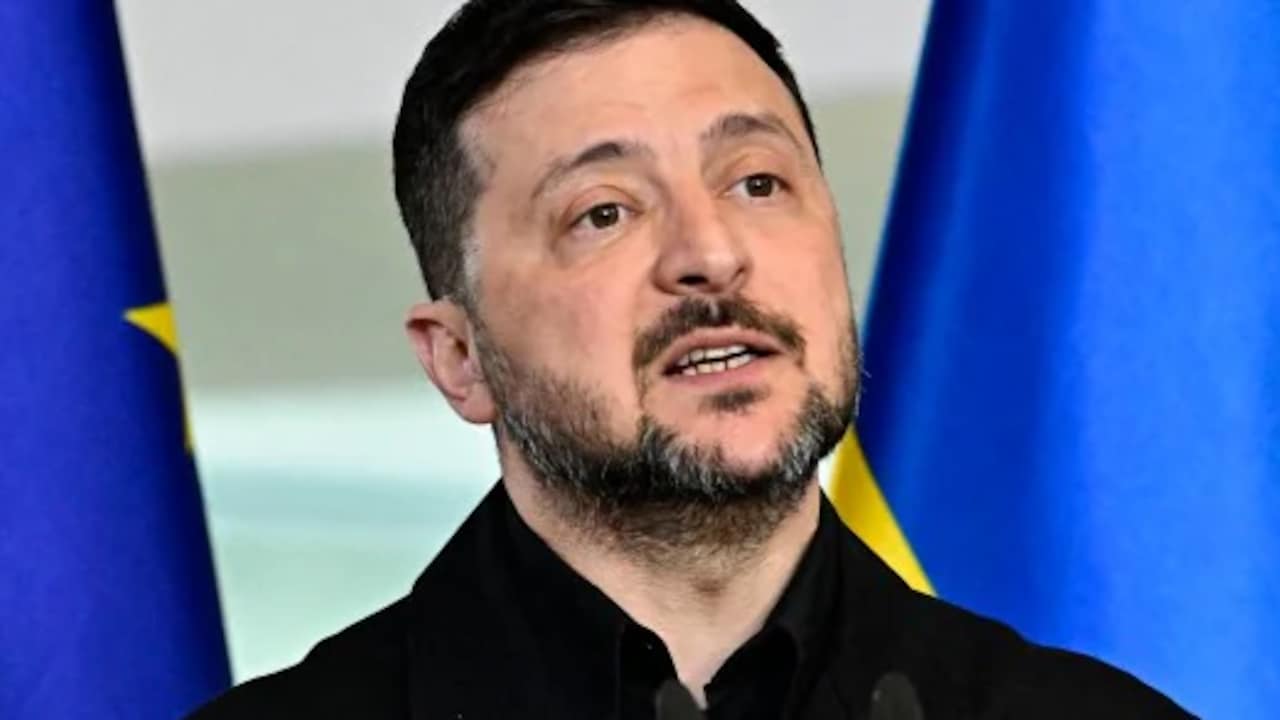
Shortly after Russiaâs invasion, state news channels echoed false comments by Russian officials that tried to present Ukrainian President Volodymyr Zelensky as having fled Kyiv. More recently, state broadcasts have portrayed Zelensky as unhinged â in contrast to his hero status in much of the West.
As the United States and its European allies have stepped up sanctions and economic restrictions on Russia, state news commentators and reporters have sought to show how bad things are in the West and also dismiss the economic threat posed to Russia.
Russian state news broadcasts have regularly been airing segments about Americans panicking over rising gas prices.
One segment included, as evidence of the panic, the Instagram video of a Philadelphia comedian, reposted by rapper 50 Cent, in which the parody actor cries, telling Biden he now has to âwalk these streets because the gas price is too high.â
Margarita Simonyan, head of the state controlled foreign language television network RT, appeared on the popular state news talk show âSunday Night with Vladimir Solovyovâ and told Russians that no matter what they think of the âmilitary operationâ in Ukraine, they must âretain the stabilityâ of the country avoid a repeat of 1917 or 1991 â the years, respectively, when the Russian Revolution took place and the Soviet Union collapsed.
Simonyan, responding to Western sanctions, said the country would live without $1,000 bras and heralded the beginning of Russiaâs âeconomic freedom.â
âIt might be rougher or softer, but one way or another, all the television channels convey the same point of view,â said Ilya Shepelin, a journalist who analyzed Russian state propaganda for a show on Russiaâs now-shuttered independent channel TV Rain. âIt is very difficult for a person to break out of that, because if he is surrounded by a unified information wall, itâs difficult to even believe that in Kyiv they could possibly be bombing civilian homes â that everything may not be so simple.â




 English (United States) ·
  Turkish (Turkey) ·