.png)
But the legislation, which largely mirrors trade sanctions already undertaken by President Biden, could be the last significant Ukraine-related matter to pass Congress for months to come — especially after lawmakers delivered $13.6 billion in military and humanitarian aid as part of a massive federal spending bill that Biden signed this week.
Among the measures that could be left on the sidelines are bills that would codify the ban on Russian oil-and-gas imports that Biden imposed earlier this month, a resolution urging the transfer of Soviet-era fighter jets from NATO countries to Ukraine, tax penalties for U.S. corporations that continue to do business with Russia and scads of other bills that lawmakers have introduced as they try to put their own stamp on a conflict of grand global and historical import.
That, in part, is an outgrowth of the difficulty of governing in a polarized Congress. But it also reflects an ongoing effort by Democratic congressional leaders to support Biden’s approach, which has prioritized coordinated action with European allies over unilateral moves.
“President Biden has done a fantastic job of leading a coordinated Western response, and it has been successful exactly because it’s been coordinated,” said Sen. Christopher A. Coons (D-Del.). “That’s how we got oil and gas sanctions, SWIFT and financial services sanctions, coordinated action against oligarchs — not by having Congress saying, we know best about air defense or we know best about financial services or we know best about energy.”
While Congress has clearly left its fingerprints on the American response to the Russian invasion, it has largely not been through legislation. Instead, it has been through a drumbeat of pressure on President Biden and on other Western powers to act more aggressively to aid Ukraine and punish Russia — whether through financial sanctions, energy policy, military aid or other levers.
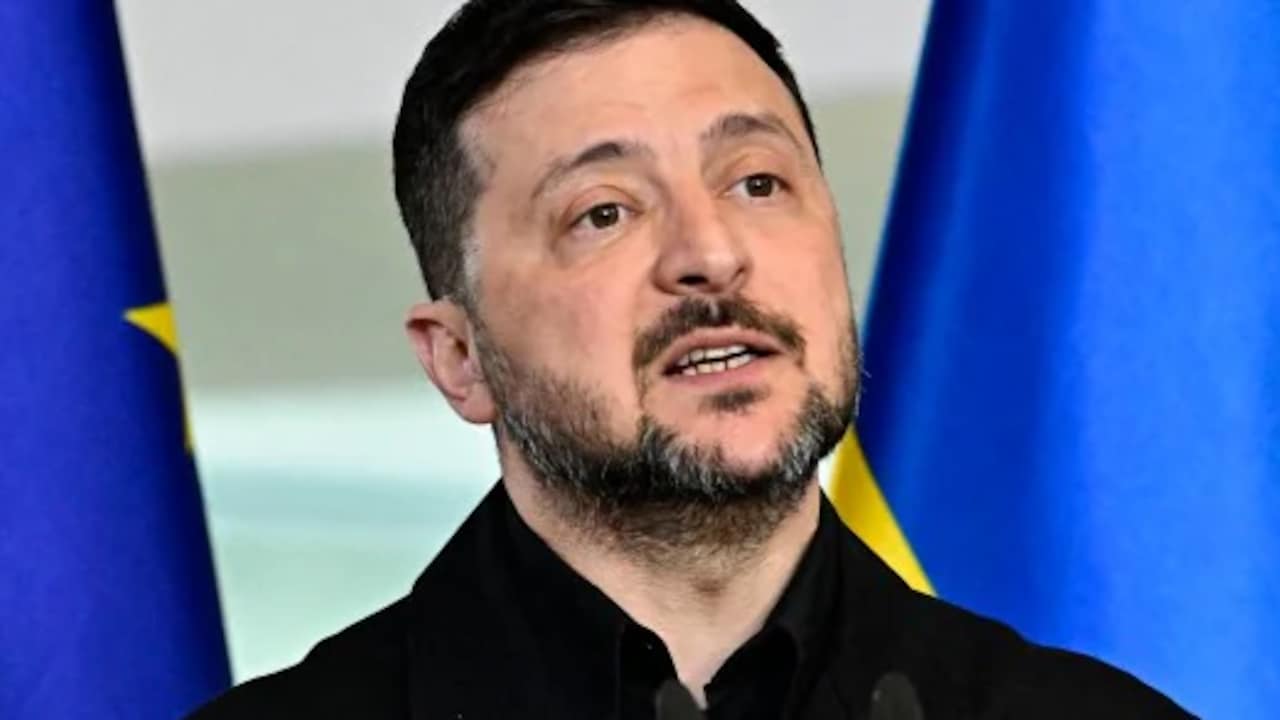
The pattern appeared to play out again Thursday: A day after Ukrainian President Volodymyr Zelensky called on Congress to “protect our sky” and help facilitate the transfer of antiaircraft systems, a key U.S. ally announced it was willing to do just that.
Slovakian Defense Minister Jaroslav Nad’ said Thursday that his country is prepared to “immediately” send S-300 surface-to-air missiles to Ukraine — the precise system Zelensky demanded — provided that Western allies give them a “proper replacement” to avoid creating a security gap.
Nad’ made the announcement in Bratislava alongside Defense Secretary Lloyd Austin, who stopped short of providing a guarantee of replacement weaponry: “These are things we will continue to work with all of our allies on and, certainly, this is not just a U.S. issue. It’s a NATO issue,” he said.
Republicans have spent weeks haranguing Biden and congressional Democrats for not being more aggressive, with some openly suggesting that the multilateral approach itself emboldened Russian President Vladimir Putin to launch his invasion of Ukraine last month. While Democrats have joined some of the calls for stronger action, they have generally been protective of Biden’s presidential prerogatives.
The trade legislation that the House passed Thursday on a 424-8 vote added Russia and Belarus to short list of international pariah states that do not enjoy favorable trade relations with the United States, joining Cuba and North Korea. Under the new law, Biden is free to reverse the designation unless Congress passes a resolution disapproving of it. That would be unlikely to pass even if Republicans subsequently win congressional majorities, due to the Senate’s filibuster rule.
The bill, notably, does not include a legislative codification of another recent Biden trade move: banning Russia’s oil and gas imports. The House moved last week to pass such a ban, with some Democrats eager to get Republicans on the record supporting a move that has spiked gasoline prices. But the idea encountered sharp resistance in the Senate, including from one of the ban’s leading proponents, Sen. Joe Manchin III (D-W.Va.).
Manchin, in interviews this week, said he was unhappy with the House bill, which included a 45-day phase-in period before the ban took full effect, and he questioned why congressional action was even necessary given Biden’s executive action: “He’s doing the right thing. Let the president do his job.”
The Senate did unanimously approve a bipartisan resolution earlier this week denouncing Russian war crimes in Ukraine and calling for an international probe; it awaits House action. But other bills — ranging from GOP-led calls to transfer the Polish jets to a bill from Sen. Ron Wyden (D-Ore.) withdrawing tax benefits from companies who do business in Russia to a bill cracking down on Russian oligarchs who shelter assets abroad — could sit for weeks or months as the Senate turns to other matters, including the confirmation of a Supreme Court justice and other key Biden administration nominees.
Sen. James E. Risch (R-Idaho), the top Republican on the Senate Foreign Relations Committee who has pushed for more robust sanctions, said it would be a mistake to stop legislating now and suggested congressional Democrats were too willing to take a back seat: “They want to turn the page and walk away? Is that what they’re saying?” he said. “We’re the first branch of government. We need we need to stay engaged. ”
The real-world impact of the trade sanctions is likely to be minimal for the economy at large. Russian imports were $29.7 billion in 2021, according to federal data, accounting for about 1 percent of the U.S. total, with crude oil and petroleum products comprising roughly half of that. Without normal trade status, also known as “most favored nation” status, tariffs increase on a wide range of goods — including some metal imports that are key to U.S. industry.
A Congressional Research Service report, for instance, notes a new 20 percent tariff on steel could mean $383 million in additional costs were imports to remain at 2021 levels. Instead, U.S. companies are likely to seek sources elsewhere in the world.
The bill also permanently reauthorizes and expands the scope of the Global Magnitsky Human Rights Accountability Act, which gives the U.S. government broad authority to issue financial sanctions against foreign individuals involved in human-rights abuses. The law, named after a Russian lawyer who died in a Moscow prison in 2009 after alleging rampant corruption in the Putin regime, has been long been a flash point in U.S.-Russia relations.
The original law targets those “responsible for extrajudicial killings, torture, or other gross violations of internationally recognized human rights” as well as those involved in “acts of significant corruption.” The revised statute would allow sanctions on those “responsible for or complicit in, or has directly or indirectly engaged in” acts of “serious” human rights abuse or corruption.
“There needs to be accountability for the enablers,” Sen. Ben Cardin (D-Md.), an author of the original law who worked to expand the scope. “Whether they’re parliamentarians or accountants or lawyers, if they are facilitating these atrocities, then there’s going to be accountability.”
Cardin said he was comfortable with a pause in legislating on Russia and Ukraine following the $13.6 billion aid infusion and the passage of the expanded human-rights sanctions. But he said the time would come to do more.
“I think our actions have been rather demonstrative, and they’ve been consequential,” he said. “At this point, I think this is adequate, but we may have to do some more as this marches on. We’re in for the short run and the long run.”
Karoun Demirjian contributed to this report.






 English (United States) ·
  Turkish (Turkey) ·