.png)
Bidenâs order, signed Friday, allocates another $3.5 billion in Afghan assets for humanitarian aid to a trust fund to be managed by the U.N. to provide aid to Afghans. The countryâs economy is teetering on the brink of collapse after international money stopped coming into Afghanistan with the arrival in mid-August of the Taliban.
Torek Farhadi, a financial adviser to Afghanistanâs former U.S.-backed government, questioned the U.N. managing Afghan Central Bank reserves. He said those funds are not meant for humanitarian aid but âto back up the countryâs currency, help in monetary policy and manage the countryâs balance of payment.â
He also questioned the legality of Bidenâs order.
âThese reserves belong to the people of Afghanistan, not the Taliban ... Bidenâs decision is one-sided and does not match with international law,â said Farhadi. âNo other country on Earth makes such confiscation decisions about another countryâs reserves.â
Afghanistan has about $9 billion in assets overseas, including the $7 billion in the United States. The rest is mostly in Germany, the United Arab Emirates and Switzerland.
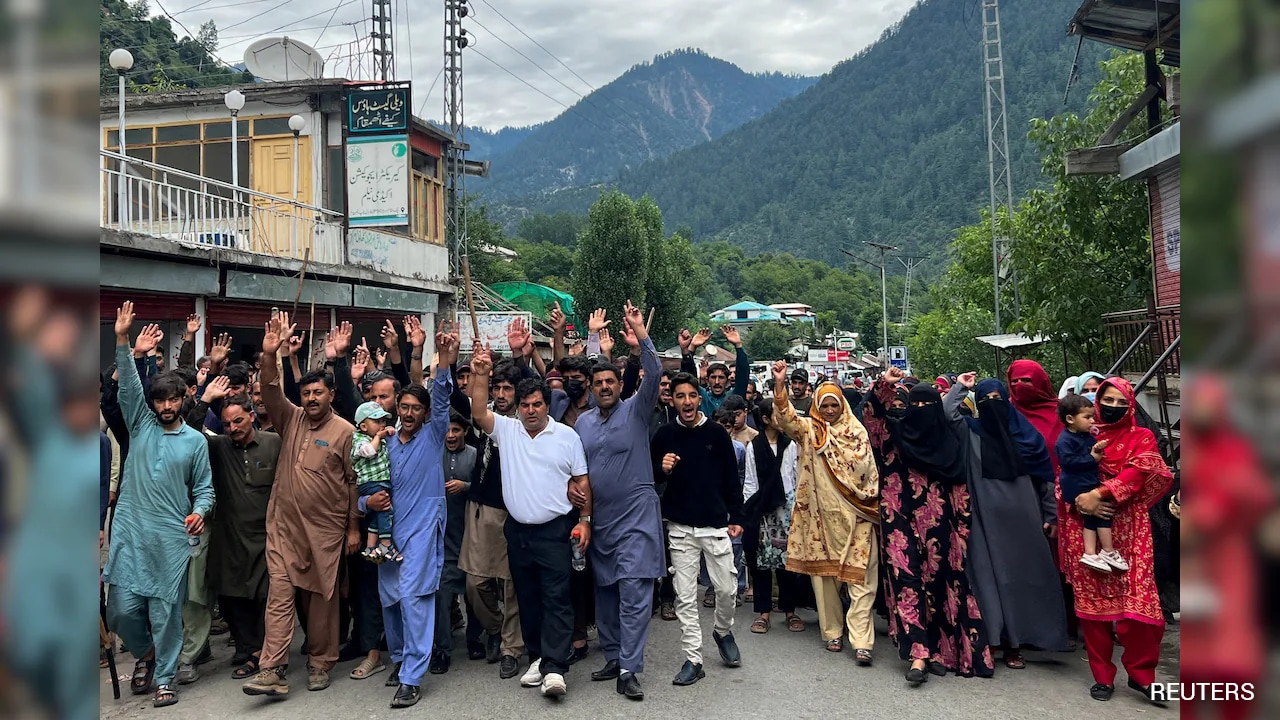
âWhat about our Afghan people who gave many sacrifices and thousands of losses of lives?â asked the demonstrationâs organizer, Abdul Rahman, a civil society activist.
Rahman said he planned to organize more demonstrations across the capital to protest Bidenâs order. âThis money belongs to the people of Afghanistan, not to the United States. This is the right of Afghans,â he said.
Misspelled placards in English accused the United States of being cruel and of stealing the money of Afghans.
Taliban political spokesman Mohammad Naeem accused the Biden administration in a tweet late Friday of showing âthe lowest level of humanity ... of a country and a nation.â
Bidenâs Friday order generated a social media storm with Twitter saying #USA_stole_money_from_afghan was trending among Afghans. Tweets repeatedly pointed out that the 9/11 hijackers were Saudi nationals, not Afghans.
Obaidullah Baheer, a lecturer at the American University in Afghanistan and a social activist, tweeted: âLetâs remind the world that #AfghansDidntCommit911 and that #BidenStealingAfgMoney!â
Al-Qaeda leader Osama bin Laden was brought to Afghanistan by Afghan warlords after being expelled from Sudan in 1996. Those same warlords would later ally with the U.S.-led coalition to oust the Taliban in 2001. However, it was Taliban leader Mullah Mohammad Omar who refused to hand over bin Laden to the U.S. after the devastating 9/11 attacks that killed thousands.
Still, some analysts took to Twitter to question Bidenâs order.
Michael Kugelman, deputy director of the Asia Program at the U.S.-based Wilson Center, called Bidenâs order to divert $3.5 billion away from Afghanistan âheartless.â
âItâs great that $3.5B in new humanitarian aid for Afghanistan has been freed up. But to take another $3.5B that belongs to the Afghan people, and divert it elsewhere--that is misguided and quite frankly heartless,â he tweeted.
Kugelman also said the opposition to Bidenâs order crossed Afghanistanâs wide political divide.
âI canât remember the last time so many people of such vastly different worldviews were so united over a US policy decision on Afghanistan,â he tweeted.




 English (United States) ·
  Turkish (Turkey) ·